April 30, 2024

Destination: Eminence

From Micro-Credentials to Macro Confidence

A group of people are sitting around a table with laptops.

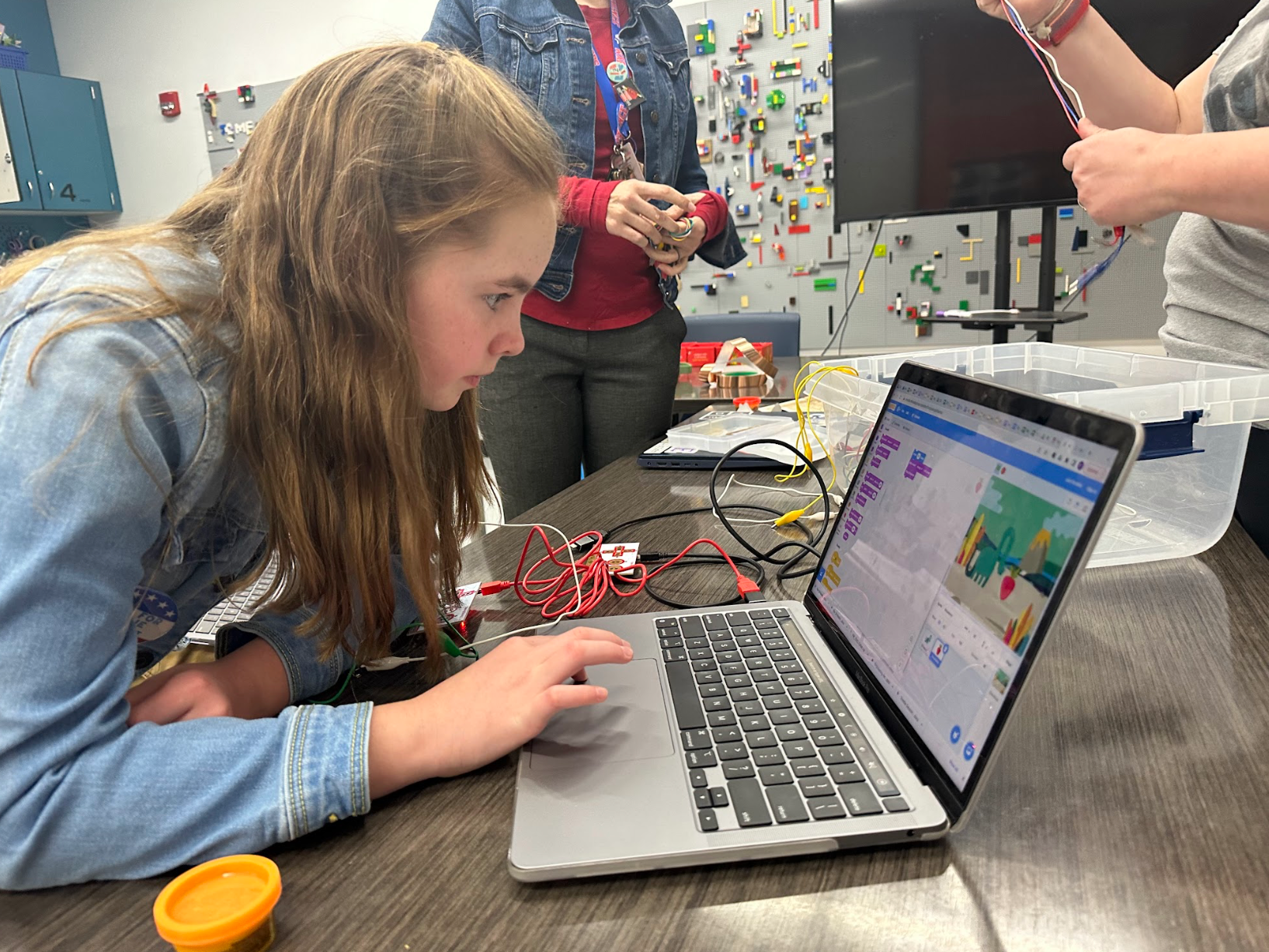
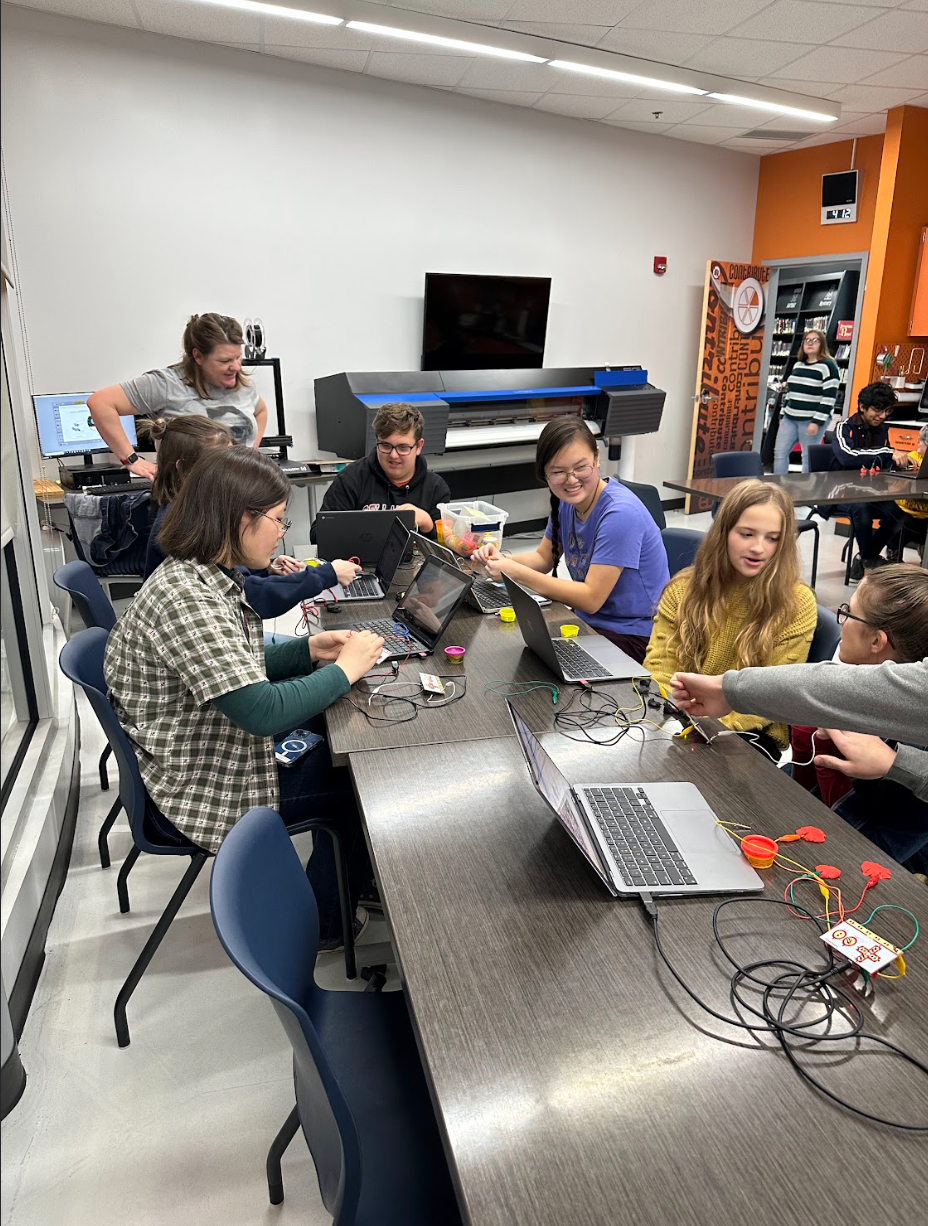
It's 3:45 in the afternoon on the Monday after Thanksgiving Break at Eminence Schools. EDhub Integration Specialists, Kendra Waddell and Jen Gilbert, wrap up dismissal responsibilities and, without missing a beat, begin facilitating a Micro-Credential Monday session over the program Makey-Makey with about a dozen students.


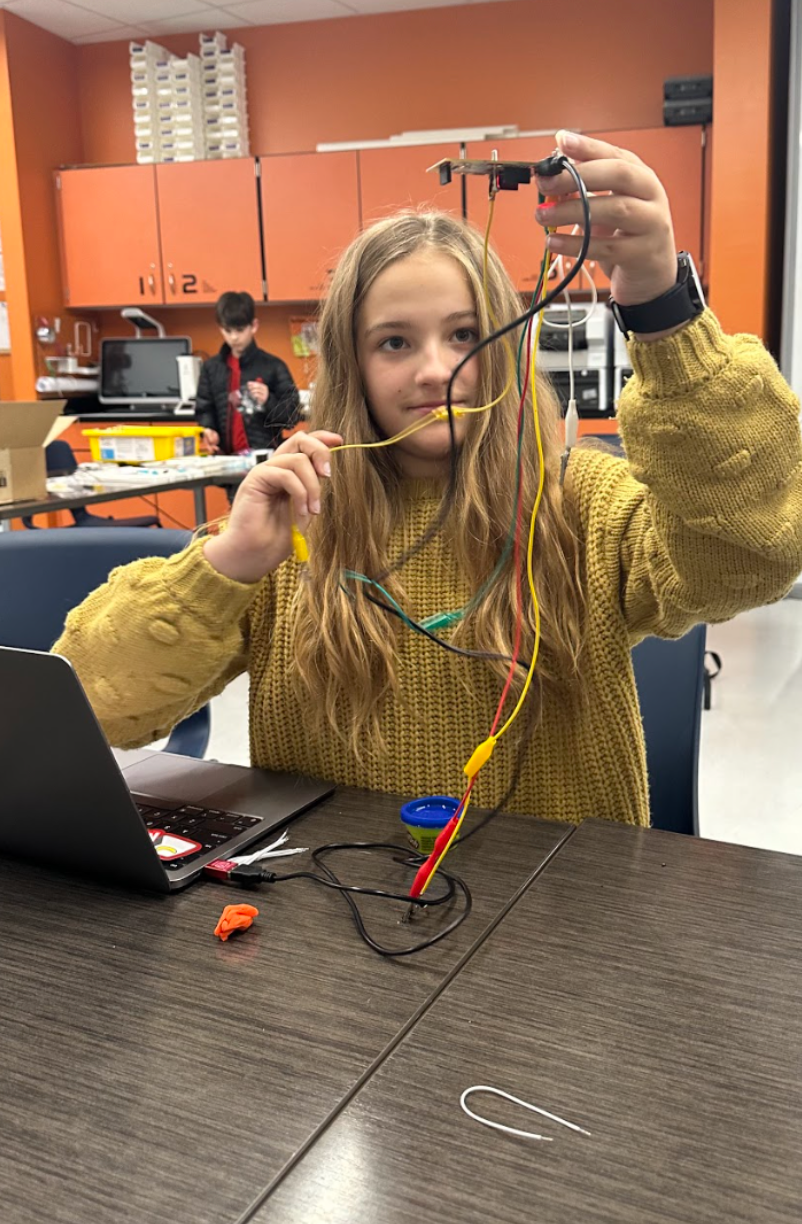
The program creates electronic circuits and interactive models that then allow users to write code for any conductive physical object. Today kids use play-dough. Students are already playing and experimenting while Waddell provides a quick demo. A couple of students successfully create circuits and write code before she can finish. We laugh as the sound of a cat's meowing fills the room when a student rapidly pushes on the play-dough he's used as a key of sorts.

As students continue experimenting, I hear one girl say, 'I feel kinda dumb' followed by nervous laughter. She doesn't give up. A few moments later she says, "Wow, I figured it out! This is awesome!"


While Makey-Makey fascinates as a program, the true magic of Micro-Credential Monday wasn't the fluency with an innovative technology students gained. It's the fact Waddell and Gilbert managed, in 20 minutes, to create the kind of learning experience teachers spend their careers striving towards.


How micro-credentialing is transforming the student experience


Gilbert describes Micro-Credentialing as one small piece of Eminence Exemplars (their Graduate Profile) which empowers teachers and students to explore new tools and technology. Earning a micro-credential badge shows they have familiarity with the tool and have completed some small project to demonstrate that mastery which could lead to much bigger things.


“What I love about our micro-credentials is the ownership of students becoming makers. We have students in love with the sublimation printer,” adds Waddell. "We have this one kid who just enjoys making weird, sarcastic shirts for his family and friends. I don’t think he’ll grow up to be a screen printer- that’s not why we micro-credential on the sublimation printer. It’s that ownership we feel sharing when we’ve made something we’re proud of...it’s empowering and builds self-confidence. It gives you the confidence to try other things.”


Gilbert concurs, “I took middle schoolers for an OVEC presentation. My 6th grade son was the wrap up- a skinny, little quirky kid, nervous- forgot a lot of his lines, but what he didn’t forget, what saved him, and was the highlight of the presentation, was what he made. His name is Lincoln and he had a micro-credential in Canva. He designed an Abraham Lincoln shirt with a quote he loves from Lincoln and then he learned sublimation and actually made the shirt. It gave him so much confidence to share. It is different to have something physical to share with people.”

Students demonstrate mastery of the Eminence Exemplar ‘Synthesize’ through earning micro-credentials. All students have access towards earning micro-credentials in their core classes. They can also attend Micro-Credential Monday to earn additional badges, like the Makey-Makey session.


Zoey, a 6th grader, earns her Makey-Makey badge the day I visit. As the hour draws to a close, one of her friends walks into the room. Zoey lights up, “Come see this! I’m proud of

it!” She shows her friend the play-dough keys she had programmed to operate as a piano, “Look I even programmed it in order!” Her friend is intrigued. “Here, I’ll teach you!”


Delight, perseverance, creativity, community, and ultimately confidence- that’s the power of Micro-Credentialing at Eminence.


How to get started


If you’re considering Micro-Credentialing, Waddell poses the question, “In your dream scenario, what technology would you love to incorporate in your curriculum? Instead of ‘I want to buy ‘x y z’, what do I want kids to be able to do? What do I already have? Start by talking to teachers to see what they’re dreaming of. For a pretty low cost, you could really up

your micro-credential game in the realm of digital making - digital visual arts (Adobe Express, Canva), podcasting, digital media. And that all leads to kids sharing their learning in a new way.”


“Start with what you’re comfortable with. At no point are we like ‘oh we want to make more work for ourselves.’ Let’s use what we have to start,” Waddell suggests.


Gilbert explains, “For example, we’ve had 500 seats for Adobe for as long as we’ve been here, but they were just being used in pockets. Covid comes and suddenly I’m teaching more and find a way to use those unused seats. I used Adobe with middle schoolers to teach graphic design.”


Of course, micro-credentialing isn’t all fun and games. “We knew nothing when we started” admits Gilbert. “It is all self-taught or we are teaching it to each other. Be mindful when you are buying technology to have the full vision. Not just learning technology, but cleaning it, maintaining it, repairing it. You don’t want to be the person who broke the $4,000 machine.” Waddell and Gilbert laugh reminiscing about upside down shirts and disintegrated masks.

“I also wouldn’t start by making it [earning micro-credentials] a requirement. I think you’d be surprised by how much kids will reach for voluntarily” Waddell adds. "It can be overwhelming. In the beginning we are just saying here are some options, who wants to come party with us?”

A young girl is sitting at a table holding a piece of wire.
A group of people are sitting around a table with laptops.
By Lacey Eckels • November 5, 2026
Discover how empowering students to recognize, document, and share powerful learning moments strengthens student voice, develops leadership skills, and brings authentic school storytelling to life.
By Lacey Eckels • October 15, 2026
Imagine a student preparing for her defense of learning. Her portfolio holds exactly what she was asked to collect: two artifacts for communication, two for collaboration, two for problem solving, two for lifelong learning. She's done everything right. But does her evidence tell a story about who she's becoming or does it just prove she met another requirement? After being part of hundreds of student defenses, we've found ourselves wondering: Have we become so focused on helping students collect evidence of competencies that we've overlooked helping them recognize the learning those experiences reveal? Consider the kinds of artifacts most often shared. Students naturally save the certificate representing the high score, the award, or a polished final product. Yet the most revealing evidence is often the prototype that failed, the feedback they resisted, or the moment they finally asked for help. The evidence that best reveals learning isn't always the evidence that best showcases success. Consider the difference between a student saying, “This project shows I'm a good collaborator,” and one explaining, “I used to think collaboration meant making sure everyone followed the plan. Now I understand the importance of listening, changing my mind, and making room for other people's ideas.” The first student has matched an artifact to a competency. The second is telling a story of learning. Helping more students get there may require rethinking not just what we collect, but how students learn to see their own growth. Read the full piece: What if the Profile is a lens, not a Filing Cabinet?
By Lacey Eckels • September 24, 2026
Rigor Lives in the Middle Vibrant learning isn't learning without challenge. It's learning where the challenge feels worth taking on.
Show More


Share this article