


November 20, 2026

Connections | Leaders and the critical role they play in Vibrant Learning

What we're exploring this week.

FROM THE FLIGHT LOG | When teachers feel caught between implementing HQIRs and creating authentic learning experiences, the solution isn't simply asking them to figure it out. This week, we're sharing an important realization on the part of one district leader and what she's doing about it.


RUNWAY READY | Here, you'll find a conversation guide to help leadership teams connect their vision for learning with HQIR implementation, clarify shared expectations, and consider how to support educators in bringing both to life.


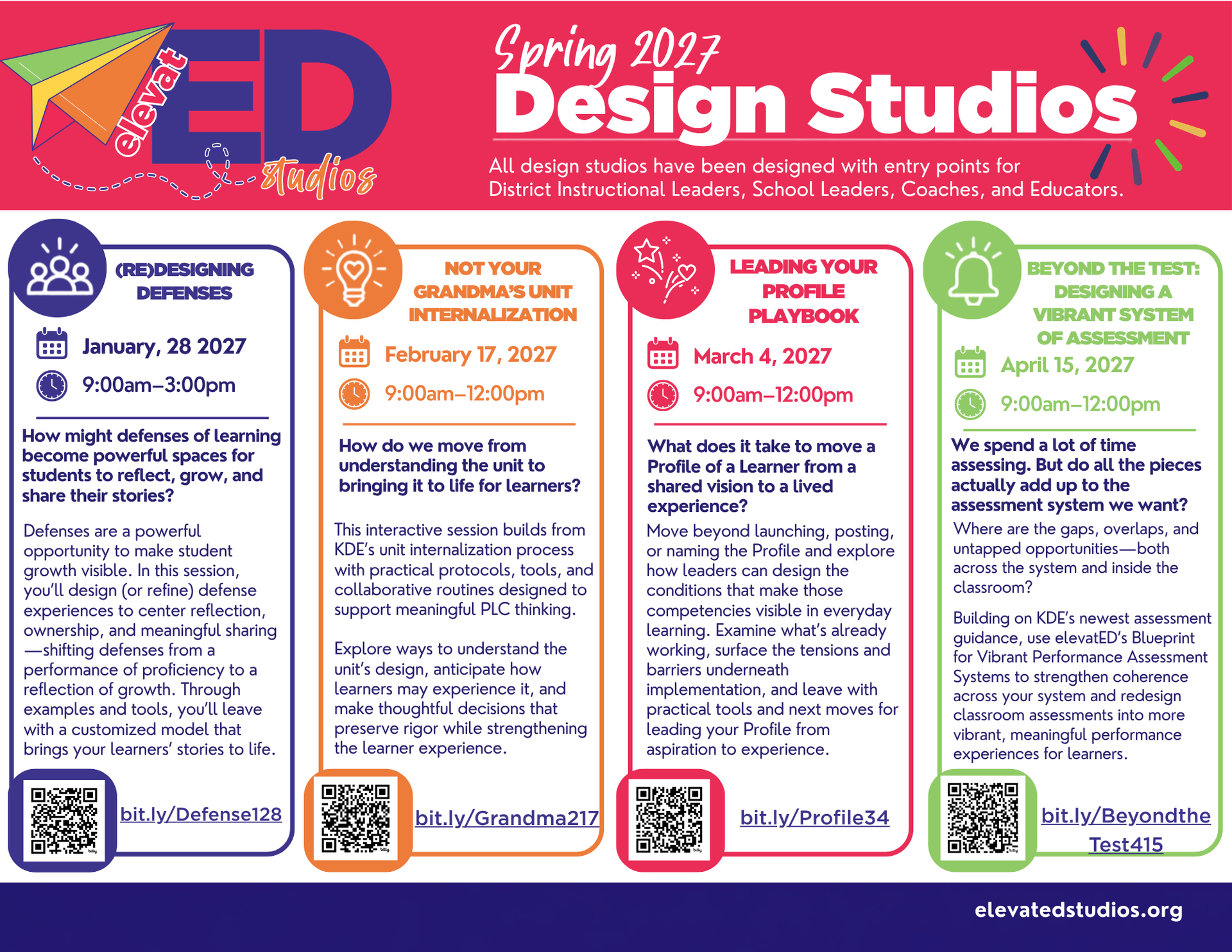
WHAT'S ON DECK | It's BACK! Join us on December 3rd for Beyond the Bell! We'll challenge assumptions about how time is used in school, explore creative possibilities, and discover how small shifts can open the door to big changes in the student experience.


Think of it as a little R&D for reimagining time! You'll find new ideas, design prototypes, and identify practical ways to test new ideas in your own school. No massive overhaul required. Just curiosity, creativity, and a willingness to try something different!


FREE for all Kentucky educators! Register here: bit.ly/vibrantbell 


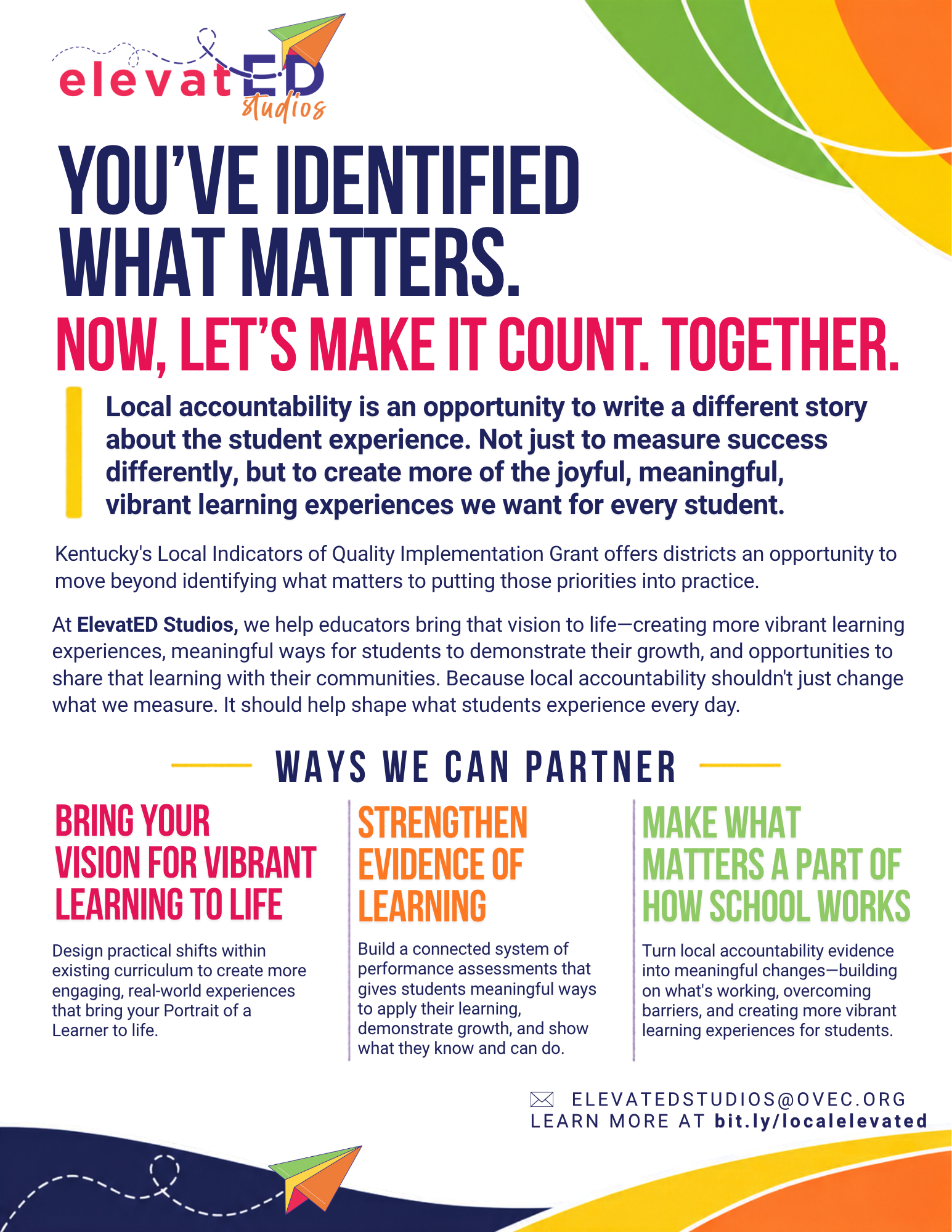
***BONUS*** Is your District ready to take the next steps in the Local Accountability journey? Are you ready to apply for KDE's Local Indicators of Quality Implementation Grant? ElevatED can help! Learn more here. 


Same Destination: ANOTHER Detour?


Before we ask more of teachers, let's get clear.

A few weeks ago, we sat down with a district leader wrestling with a challenge that might sound familiar.


Several years ago, her district began reimagining learning. They invested in project-based learning, developed a Portrait of a Learner, and introduced performance assessments, including Defenses of Learning, to capture a fuller picture of student growth. These weren't separate initiatives. They were pieces of a larger vision for the learner experience.


Then came high-quality instructional resources (HQIRs).


For teachers who had spent years designing authentic learning experiences, the shift felt almost like a 180. They'd poured their time, creativity, and heart into projects they were proud of. Experiences they'd been encouraged to create. Experiences they believed were making a difference for kids. Now, they were being asked to implement instructional materials that didn't always seem to reflect those same priorities.


This leader understood their frustration. She believed in those experiences, too. She didn't want teachers to abandon the work they'd done or the vision behind it. But she also saw real possibilities in the resources they'd selected.


The materials aligned with many of their beliefs about authentic, project-based learning. They offered structures and experiences teachers had previously been designing themselves, along with concrete lessons to build students' content knowledge. For teachers just getting started, they provided a foundation rather than having to create everything from scratch.

She could see how the resources might support their vision, even if they couldn't bring that vision to life on their own.


The challenge? Not everyone was seeing or feeling that connection.


Different leaders were communicating different expectations. Some emphasized fidelity to the materials. Others encouraged adaptation. And even when the conversation shifted from fidelity to integrity, what did that actually mean in practice?


It's a tension that extends well beyond one district. Teachers might hear, “Stick to the resource,” while also hearing, “Don't lose the authentic learning experiences we've worked so hard to create.” Somewhere in between, they're trying to make sense of fidelity, flexibility, and professional judgment. What needs to stay intact? Where is there room for teacher judgment? They're left feeling frustrated and, honestly, a little afraid of getting it wrong.


As we talked, she began to recognize that this wasn't something teachers could (or should) have to figure out on their own.


This leader saw that the path forward wasn't about asking more of teachers. It was about making sure leaders were clear on what they were asking of them. What role did they believe HQIRs should play in bringing their vision for learning to life? What might that look like in practice? And how could they communicate a shared set of expectations that honored both the resources and the learning experiences they valued?


Because new curricula, initiatives, and expectations will keep coming. But the vision for the learner experience shouldn't have to change with each one.


What if, instead of allowing each new initiative to redefine the learning experience, we got clearer about how each new piece could serve the vision we've already committed to?

What Matters: Keeping the Student Experience in Focus

The leader in our story recognized something important: Teachers shouldn't have to figure out how HQIRs fit into their district's vision for learning on their own. That's leadership work.


This week's Runway Ready resource, Keeping the Learner Experience in Focus, is a conversation guide to help leadership teams connect their vision for learning with HQIR implementation, clarify shared expectations, and consider how to support educators in bringing both to life.


Think of it as a starting point, not the whole process. The conversations it sparks may reveal questions worth exploring more deeply. And if your team is ready to dig in, we have more tools, protocols, and leadership learning experiences to help you work through those questions and turn shared understanding into practice.


Explore the Conversation Guide → Keeping the Learner Experience in Focus.

Learning Flight Plan


Design with us!!!!


Whether or not you are in the OVEC region, all are welcome to learn with us - and at no cost! 


Is your District ready to take the next step in the 

Local Accountability journey? 


Are you ready to apply for 

KDE's Local Indicators of Quality Implementation Grant? 


ElevatED can help! 

Learn more here. We'd love to be your design partners.


By Lacey Eckels • November 5, 2026
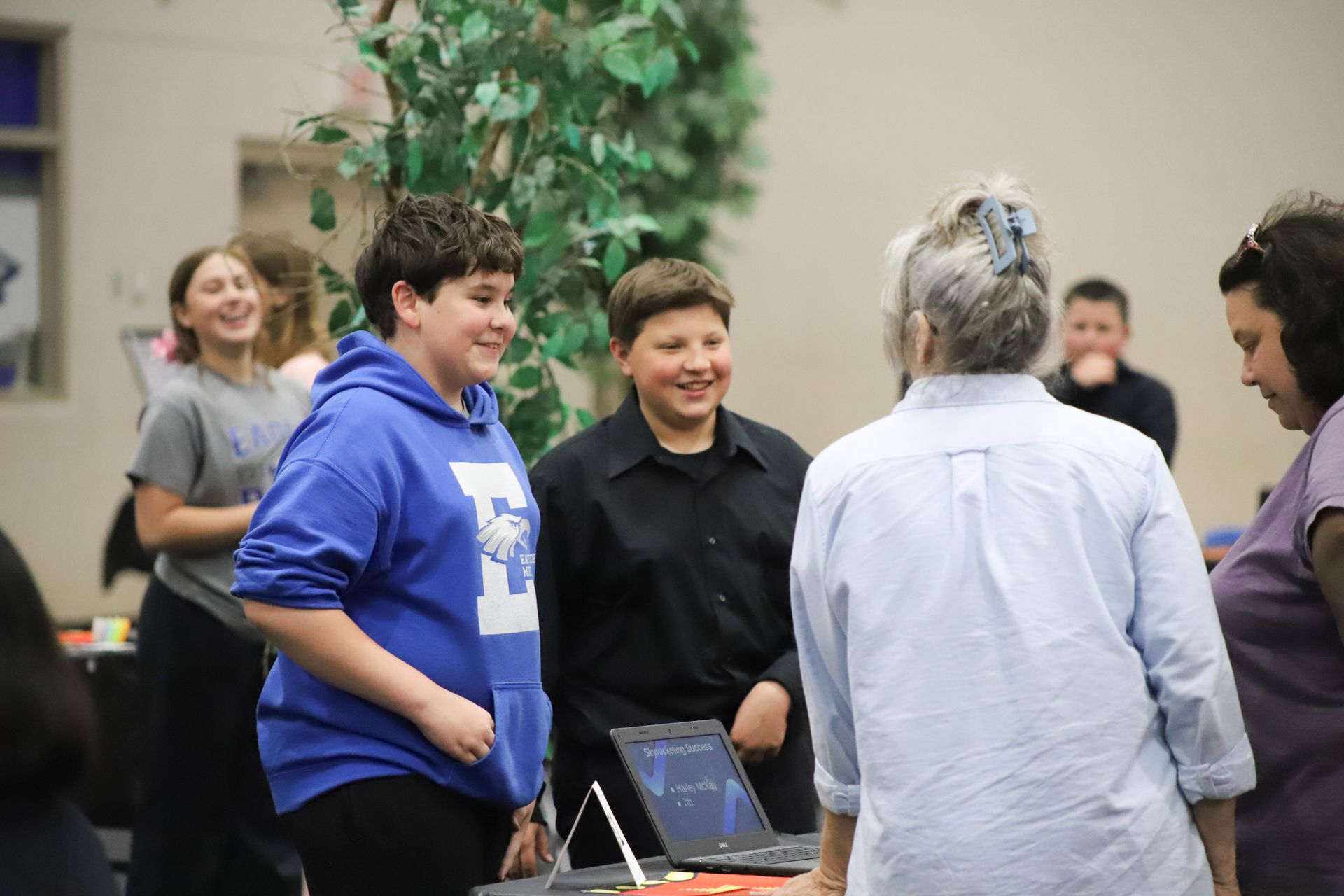
Discover how empowering students to recognize, document, and share powerful learning moments strengthens student voice, develops leadership skills, and brings authentic school storytelling to life.
By Lacey Eckels • October 15, 2026
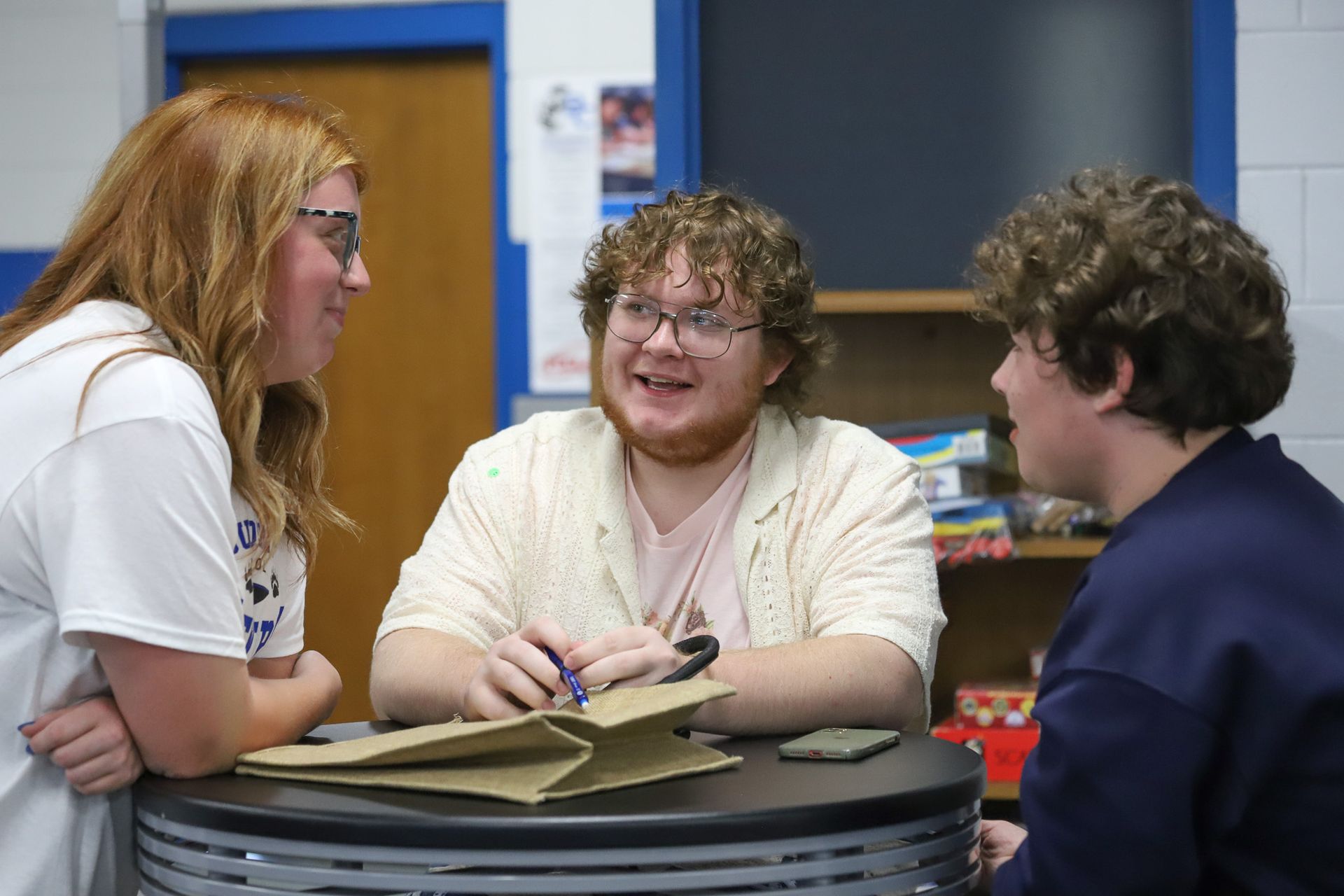
Imagine a student preparing for her defense of learning. Her portfolio holds exactly what she was asked to collect: two artifacts for communication, two for collaboration, two for problem solving, two for lifelong learning. She's done everything right. But does her evidence tell a story about who she's becoming or does it just prove she met another requirement? After being part of hundreds of student defenses, we've found ourselves wondering: Have we become so focused on helping students collect evidence of competencies that we've overlooked helping them recognize the learning those experiences reveal? Consider the kinds of artifacts most often shared. Students naturally save the certificate representing the high score, the award, or a polished final product. Yet the most revealing evidence is often the prototype that failed, the feedback they resisted, or the moment they finally asked for help. The evidence that best reveals learning isn't always the evidence that best showcases success. Consider the difference between a student saying, “This project shows I'm a good collaborator,” and one explaining, “I used to think collaboration meant making sure everyone followed the plan. Now I understand the importance of listening, changing my mind, and making room for other people's ideas.” The first student has matched an artifact to a competency. The second is telling a story of learning. Helping more students get there may require rethinking not just what we collect, but how students learn to see their own growth. Read the full piece: What if the Profile is a lens, not a Filing Cabinet?
By Lacey Eckels • September 24, 2026
Rigor Lives in the Middle Vibrant learning isn't learning without challenge. It's learning where the challenge feels worth taking on.

Show More
By Lacey Eckels • November 5, 2026
Discover how empowering students to recognize, document, and share powerful learning moments strengthens student voice, develops leadership skills, and brings authentic school storytelling to life.
By Lacey Eckels • October 15, 2026
Imagine a student preparing for her defense of learning. Her portfolio holds exactly what she was asked to collect: two artifacts for communication, two for collaboration, two for problem solving, two for lifelong learning. She's done everything right. But does her evidence tell a story about who she's becoming or does it just prove she met another requirement? After being part of hundreds of student defenses, we've found ourselves wondering: Have we become so focused on helping students collect evidence of competencies that we've overlooked helping them recognize the learning those experiences reveal? Consider the kinds of artifacts most often shared. Students naturally save the certificate representing the high score, the award, or a polished final product. Yet the most revealing evidence is often the prototype that failed, the feedback they resisted, or the moment they finally asked for help. The evidence that best reveals learning isn't always the evidence that best showcases success. Consider the difference between a student saying, “This project shows I'm a good collaborator,” and one explaining, “I used to think collaboration meant making sure everyone followed the plan. Now I understand the importance of listening, changing my mind, and making room for other people's ideas.” The first student has matched an artifact to a competency. The second is telling a story of learning. Helping more students get there may require rethinking not just what we collect, but how students learn to see their own growth. Read the full piece: What if the Profile is a lens, not a Filing Cabinet?
By Lacey Eckels • September 24, 2026
Rigor Lives in the Middle Vibrant learning isn't learning without challenge. It's learning where the challenge feels worth taking on.
Show More


Share this article