February 3, 2025

Destination: Casey Duvall's Classroom iLEAD Academy

Designing meaningful, inspiring learning

experiences that honor students’ personal

strengths and interests while also aligning academic standards can seem overwhelming.


We know an all too real barrier to providing students with authentic learning experiences that do that, like PBLs, inquiry-based learning, and performance assessments, is the sheer amount of time it takes a teacher to design.


At the same time, we want students to own their learning. Our learner profiles value skills like ‘self-directed learning’, ‘setting goals’, ‘failing and trying again’, ‘designing solutions to complex problems’.


So, how might we, with our limited time and

resources, do both: design meaningful learning

experiences AND empower students to lead

and own that learning?


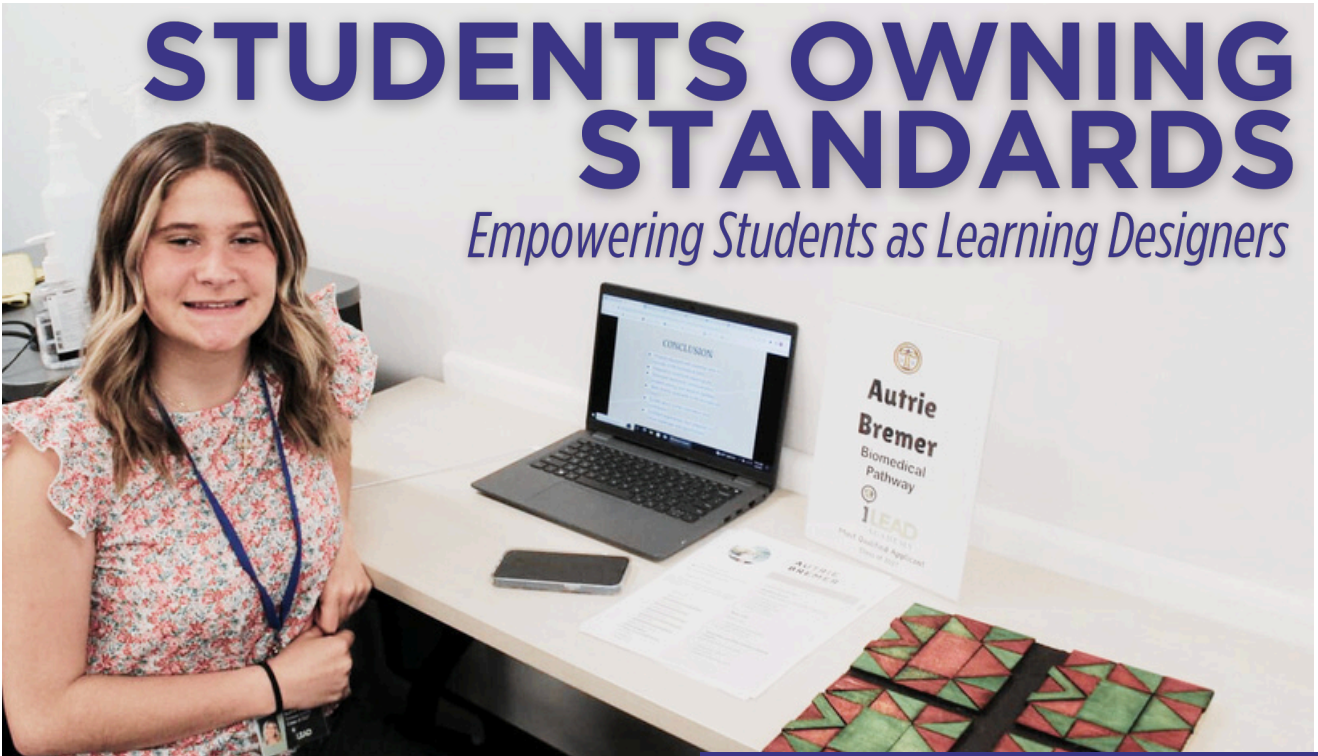
iLEAD Academy Math teacher, Casey Duvall, has one promising solution. Throughout this year, Duvall’s students have been engaged in numerous project-based performance assessments she designed such as proposing a solution for a community health concern or designing a mini golf course.


Midway through the school year, she began looking for a way to create an even more learner-led environment. She wondered, ‘What might happen if I asked students to design the performance assessment for the next unit?’


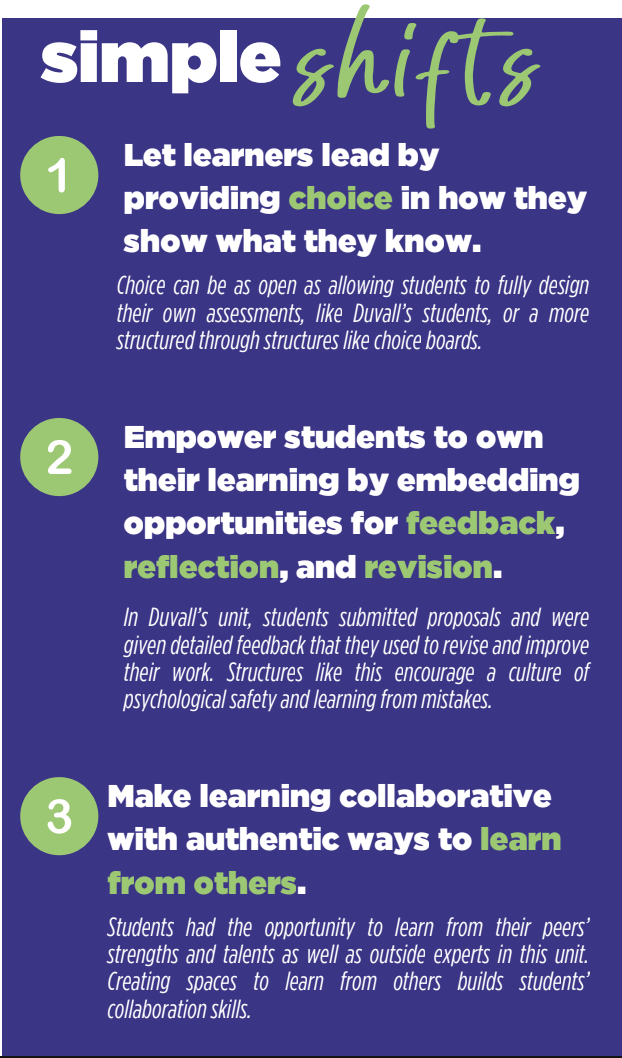
How Duvall is transforming the student experience...


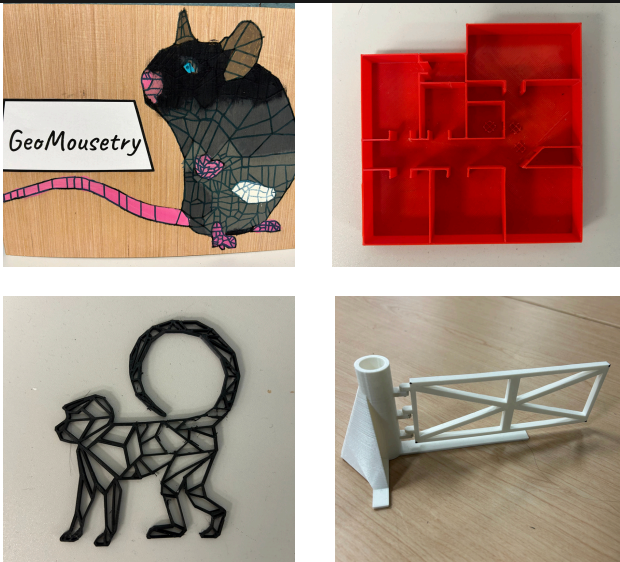
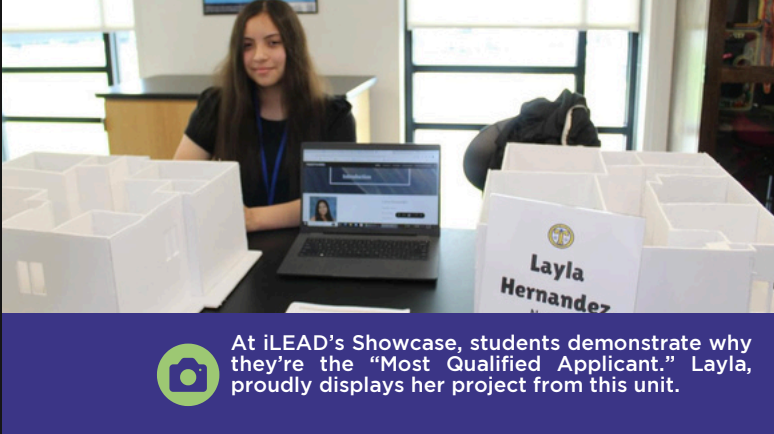
So she did just that. Duvall challenged students to design something that would illustrate that they had learned and could apply the standards behind their unit on quadrilaterals and other polygons. Put another way, she empowered students to design their own performance assessments.


She began by giving students a taste of the standards for the upcoming unit and co-creating the criteria for success. “We really had to break the standards down together so that they could understand the rigor of the math that their proposal would need to include.”

From that taste, students wrote proposals using a planning template Duvall created. Initially, many students were stumped. They’d never been asked to design learning like this.


They sought inspiration in many forms.


One student, Lizzy, discovered a personal connection: “My mom was working on stained glass at the time, and from our talks in class, I recognized that the art has many of the shapes our standards required combined.”


Some students, like Arlis, designed with their talents and interests in mind, “My partner on the project was really artistic and loves gardening, so we wanted to incorporate those talents in our project.”


Still others, like Keydi, weren’t sure where to start, “My partner and I had a hard time at first coming up with ideas. I am very conscientious and really wanted to be sure that whatever we did included every standard. We thought about designing a frame, a board game and even a scale model of a city. In the end, we decided on creating a maze.”


Simply submitting a proposal didn't give students the green light to go ahead. Duvall scrutinized each proposal ensuring that it aligned to the rigorous math standards, “Many students had to rewrite their proposals three times. Some were frustrated because they just wanted me to tell them what to do.”


One student, Sebastian, realized that the desk mount he was designing outside of math class actually involved many of the standards. However, when he submitted the initial proposal to Duvall he discovered it didn’t quite fit the standards. After revisions, he had a couple of ideas that were interesting and met the rigor of the standards.


Instruction in the unit was similar to that of others Duvall led that year. “I still taught the lessons like normal, and I built in time throughout for kids to work on their projects. At the end of the unit, I gave them a few days to finalize their projects with peer reviews.”


The shift to student-designed assessments had a lasting impact on Duvall’s students.


Lizzy remarks, “This project was my favorite one I did in all of my classes freshman year. It made geometry a lot easier, and it let me stand out in my own way.”


Arlis agrees, “This was more fun because we could build a project around things that we are good at. By designing a project around our strengths, everyone was included and no one felt left out.“

For others, it was the relevancy of designing the project. “I am in the engineering pathway. Problem solving is my skill set. This project made me think a lot more, I get more out of it when I design it,” Sebastian states.


In fact, every student shared skills they learned beyond the math content. They reflected on their growth in skills like creativity, problem solving, reslience, and time management- skills we know communities value.


How to get started...


If you’re looking to empower students as learning designers, Duvall and her students share some lessons learned . First and foremost, Duvall advises humility, “You’ve got to be okay with not knowing everything. You have to be comfortable with kids trying things you have no experience with. You’ve got to be able to empower and push the kids to find the person who is the expert.”

Gradually easing into more and more student- led models can prepare students for the heavier lift of designing their own assessments. iLEAD Director, Jenna Gray, compliments Duvall’s model, “First semester she did the major designing of the projects while still giving students many choices about their learning. That laid a foundation of what a well designed project looks like so that in the spring students knew better how to design.


Lizzy agrees, “I wouldn’t make it the first unit. I needed to learn what makes a good project.”


One pain point for teacher and students alike in this experience was the proposal process. “You’ve got to really be prepared to give kids feedback on their proposals. Being ahead in my planning helped with that,” says Duvall.


For supporting students in the proposal process, Keydi suggests that “teachers could give students some ideas to help them start. One of the hardest parts was seeing other groups get started while my partner and I were still struggling to come up with an idea.”

Arlis cautions not to do too much of the thinking for learners, though, “A lot of students were asking for advice. Help them a little, but not too much.” There is beauty in the struggle.


And finally, just like we want to create spaces where our learners feel comfortable to try new challenging things, fail, and try again, our teachers, too, need that space.


Duvall states, “I felt like I had the freedom to just try. If I messed up, it would be okay.”


By creating opportunities for students to lead their learning, Duvall’s students created not only physical projects that were unique and imaginative, but also learning that will last due to the students’ personal connections.


As Sebastian puts it, “Give students freedom, and they will create something awesome.”

By Lacey Eckels June 17, 2026
Discover why coherence is the leadership move that matters most and how aligned systems create clarity, reduce overwhelm, and elevate learning.
By Lacey Eckels May 20, 2026
Take a closer look at Butler County Schools’ vibrant learning ecosystem, explore tensions between HQIRs and authentic learning, and access a free practical tool educators can use today.
By Lacey Eckels May 11, 2026
Show More
By Lacey Eckels June 17, 2026
Discover why coherence is the leadership move that matters most and how aligned systems create clarity, reduce overwhelm, and elevate learning.
By Lacey Eckels May 20, 2026
Take a closer look at Butler County Schools’ vibrant learning ecosystem, explore tensions between HQIRs and authentic learning, and access a free practical tool educators can use today.
By Lacey Eckels May 11, 2026
Show More


Share this article