
September 2, 2025

Reimagining Writing at Williamsburg

Reimagining Writing at Williamsburg

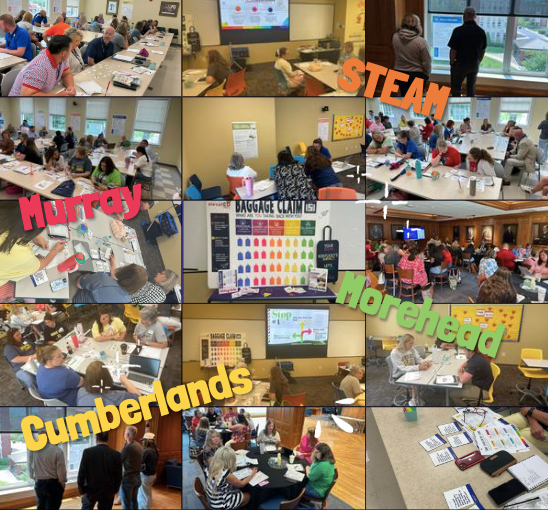
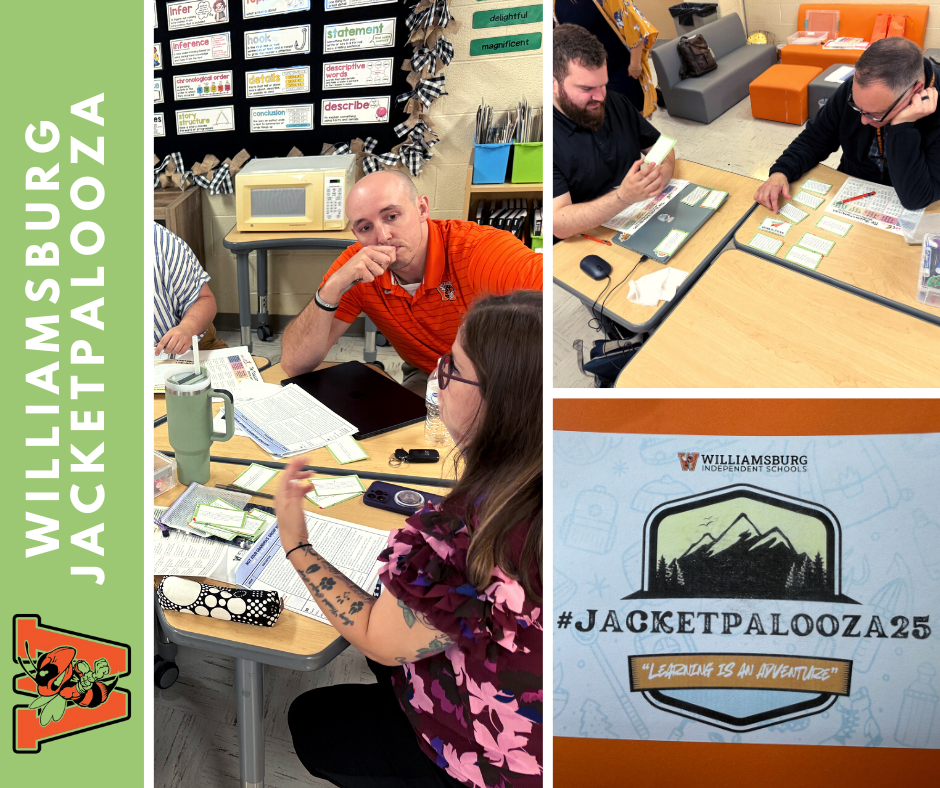
How do we design writing experiences that feel relevant, human, and joyful for today’s learners? At Williamsburg Independent School’s Jacketpalooza, educators took on this challenge in our session, Not Your Grandma’s 5 Paragraph Essay, exploring how simple shifts can bring new life to writing.


The session began with educators reflecting on their own most meaningful writing moments. From there, they surfaced the five Transformations that spark vibrant learning and considered how small design changes can move writing beyond the page and into the real world. One example: instead of a generic “how-to” essay, learners might ask, “How can we make our littlest learners feel welcome?” After empathy interviews with current kindergartners, they create guides—videos, pamphlets, or infographics—for incoming families at Kindergarten Camp. These shifts deepen critical thinking while positioning students as creators with a genuine audience.


Educators also dug into shifts in the writing process itself:

  • Idea Generation – How can we help learners connect to their writing and think freely?
  • Drafting – How can writers draft with less pressure and more purpose?
  • Revision – How do we make revision about voice and vision, not red ink?
  • Collaboration – What does it look like for peers to act as sounding boards and co-creators?
  • Publication – How can students share their work beyond the classroom walls?


The takeaway? Reimagining writing doesn’t require an overhaul. Even small, intentional shifts at each stage can spark more joyful, authentic, and sustainable writing for both learners and teachers.


Not Your Grandma's Guide to Vibrant Writing

Are you asking the same kinds of questions Williamsburg teachers wrestled with: How do we make writing more relevant, more human, more joyful especially in the age of AI? Ready to try a few simple shifts in your own classroom? We’ve pulled together a free preview of our resource, Not Your Grandma’s Guide to Vibrant Writing, so you can explore some first steps.


In these opening pages, you’ll find the five Transformations that spark vibrant learning, a table of contents of all the moves, and the first three “launch” strategies designed to help writers get started with energy and authenticity. Say It Out Loud First invites students to speak their ideas before they write, capturing their real voice and letting the words flow more naturally. Ask Your Own Question gives learners the chance to frame their own inquiry, so their writing begins with genuine curiosity rather than compliance. And Draft in the DM asks writers to jot down their thoughts as if texting a friend, lowering the stakes and surfacing the heart of what they really want to say.


This preview is only the beginning. If you would like to bring this tool to life in your district, school, PLC, or team we would love to partner with you to co-design a session that fits your needs.


Your Fall Learning Flight Plan

✈️ September 22 – The Learner/Graduate Profile Playbook (9am–3pm)


💬 Make collaboration & communication the heartbeat of your classrooms

Your Learner Profile can be more than a poster on the wall. In this full-day deep dive, teachers, coaches, and school/district leaders will:


  • Design powerful learning for collaboration + communication
  • Walk away with ready-to-run lessons and strategies
  • Profile or no profile—you’ll leave with tools to transform teaching and learning, because a profile isn’t the goal, the learning it sparks is.
  • 🔗 Sign up here


✈️ September 29th - Local Accountability Cohort Kickoff (9am-12pm) 


🚀 It’s time to rewrite the story of success

Current systems only tell part of the picture. This kickoff invites educators, coaches, and leaders to:


  • Learn alongside districts breaking free from compliance-only measures
  • Explore real prototypes + models that are working now
  • Build the foundations for scalable, community-powered accountability
  • 🔗 Sign up here


✈️ November 5 – Coaching for Vibrant Learning (9am–3pm)


🌟 Coaching that’s joyful, energizing, and impactful

Why settle for coaching that feels like compliance? This day gives coaches and leaders the chance to:


  • Learn protocols + frameworks that bring joy to coaching
  • Build feedback routines that motivate teachers
  • Walk away with tools, inspiration, and a plate full of fresh ideas 🍽️
  • 🔗 Sign up here


By Lacey Eckels April 2, 2026
Schools have named durable skills like communication and collaboration, but struggle to teach them intentionally. Schools that succeed make skills visible, embed them into daily learning, and apply them in real-world contexts. The core message is clear: durable skills are built through intentional, everyday design.
By Lacey Eckels March 17, 2026
What does it look like when a student’s Defense of Learning truly embodies a district’s Profile of a Learner? This 11-year-old’s compelling TED-style talk offers a powerful example. The format might not be what many of us expect in a traditional defense, yet the Portrait competencies are unmistakably present. Communication is evident in his pacing, tone, eye contact, and ability to connect with the audience. Collaboration surfaces as he references mentors and teammates who shaped his journey. Critical thinking appears in the way he interprets experiences and draws lessons from them. Problem-solving emerges through stories of obstacles, setbacks, and growth. The competencies aren’t listed on a slide. They are visible in the delivery. From Sorting Evidence to Synthesizing Growth Many student defenses are structured competency by competency: “Here is my artifact. Here is how it shows I am an effective communicator.” This approach provides clarity and helpful scaffolding, especially as districts begin Portrait work. Over time, however, the structure can unintentionally shift the focus from growth to compliance. The TED-style defense offers a different approach. Instead of sorting artifacts into categories, the student synthesized experiences into a cohesive narrative. He reflected on meaningful moments, described growth over time, connected experiences to identity, and communicated his story clearly to an authentic audience. Rather than organizing artifacts, he was articulating who he is becoming. A Design Question for Leaders What if the defense itself became the demonstration of Profile competencies?  In other words, what if the most powerful defenses were those in which students embody communication, critical thinking, collaboration, and problem-solving through the way they share their learning—making the competencies visible in action, not just in explanation?
By Lacey Eckels March 3, 2026
Start with purpose when designing Defenses of Learning. Discover how clarity transforms these experiences from compliance-driven tasks into meaningful opportunities for student reflection, growth, and authentic demonstration of learning.
Show More
By Lacey Eckels April 2, 2026
Schools have named durable skills like communication and collaboration, but struggle to teach them intentionally. Schools that succeed make skills visible, embed them into daily learning, and apply them in real-world contexts. The core message is clear: durable skills are built through intentional, everyday design.
By Lacey Eckels March 17, 2026
What does it look like when a student’s Defense of Learning truly embodies a district’s Profile of a Learner? This 11-year-old’s compelling TED-style talk offers a powerful example. The format might not be what many of us expect in a traditional defense, yet the Portrait competencies are unmistakably present. Communication is evident in his pacing, tone, eye contact, and ability to connect with the audience. Collaboration surfaces as he references mentors and teammates who shaped his journey. Critical thinking appears in the way he interprets experiences and draws lessons from them. Problem-solving emerges through stories of obstacles, setbacks, and growth. The competencies aren’t listed on a slide. They are visible in the delivery. From Sorting Evidence to Synthesizing Growth Many student defenses are structured competency by competency: “Here is my artifact. Here is how it shows I am an effective communicator.” This approach provides clarity and helpful scaffolding, especially as districts begin Portrait work. Over time, however, the structure can unintentionally shift the focus from growth to compliance. The TED-style defense offers a different approach. Instead of sorting artifacts into categories, the student synthesized experiences into a cohesive narrative. He reflected on meaningful moments, described growth over time, connected experiences to identity, and communicated his story clearly to an authentic audience. Rather than organizing artifacts, he was articulating who he is becoming. A Design Question for Leaders What if the defense itself became the demonstration of Profile competencies?  In other words, what if the most powerful defenses were those in which students embody communication, critical thinking, collaboration, and problem-solving through the way they share their learning—making the competencies visible in action, not just in explanation?
By Lacey Eckels March 3, 2026
Start with purpose when designing Defenses of Learning. Discover how clarity transforms these experiences from compliance-driven tasks into meaningful opportunities for student reflection, growth, and authentic demonstration of learning.
Show More


Share this article