
October 20, 2025

From PLCs to Real-World Relevance

This article has been written by Lacey Eckels

From PLCs to Real-World Relevance

In Rowan County Schools, transformation is happening one PLC at a time. Rather than treating high-quality instructional resources (HQIRs) as fixed scripts, teachers are reimaging them as launchpads for community-connected learning.


Grade-level PLCs gather not only to unpack their HQIRs, but to ask a bigger question: “Where does this connect to our community?” Together they look for ways to extend the unit into the community or amplify it with digital tools. These “simple shifts”, small design choices build toward the five Transformations: Personal, Learner-Led, Real-World, Learner-Owned, and Collaborative.


Across grade levels, those shifts are easy to spot:

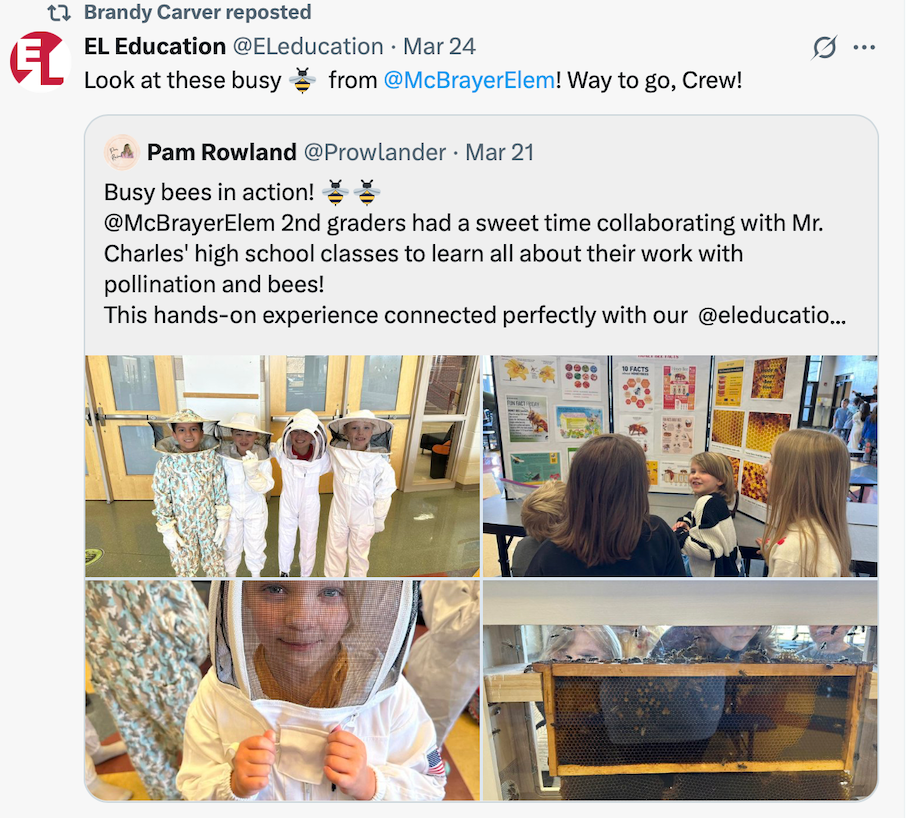
  • 2nd Grade – Pollination Collaboration: Partnering with the Rowan County Senior High School Civil Engineering class, second graders explored pollination through hands-on STEM learning. Older students built bee boxes and shared design insights, while elementary learners connected their EL module to real-world engineering and ecology.
  • 3rd Grade – Schools Around the World Simulation: Students read about education across cultures, then turned their playground into a global learning space, building “classrooms” on a bus, under a tent, and beside a picnic table to experience how school looks different around the world.
  • 3rd Grade – The CES Unloved Books Podcast: A reading strategies lesson evolved into a student-produced podcast that gave learners a public voice and an authentic audience. They even presented their project at the state STLP competition.
  • 7th Grade – Epidemics Unit: Students in an EL module on Patient Zero created their own digital campaigns to explain how information (and misinformation) spreads, connecting literacy and science through storytelling.

Across every example, the pattern is clear: Rowan’s PLCs are incubators for transformation. Through intentional coaching and collaboration, Rowan County is proving that vibrant learning isn’t about replacing resources, it’s about reimagining how they connect to the world students live in.


A Toolkit for Designing with integrity: 

Using HQIRs to bring The Transformations to life.


Rowan County’s story reminds us: transformation doesn’t always start from scratch, sometimes it starts with just a new lens. Their instructional coach used PLC time to help teachers look at the lessons they already have and ask, “What small shift could make this more authentic, connected, and alive for our learners?” That same idea is also captured in our HQIR Case Studies Tool


This PLC-ready resource helps teams study side-by-side examples of HQIR lessons, the original version and a simple-shifted version redesigned through The Transformations. Each case comes with reflection prompts, design questions, and a process teams can use to plan their own shifts.


Whether your next PLC is 15 minutes or a full block, this tool makes it easy to practice designing with integrity over fidelity, shaping high-quality resources into vibrant learning.


✈️ Explore the HQIR Case Studies here.


We partner with schools to bring these moves to life, in PLCs, faculty meetings, co-teaching cycles, and custom PD sessions. If you’re ready to simple shift your HQIR we are here to help! 


Your Fall Learning Flight Plan

 ✈️ November 5 – COACHING FOR VIBRANT LEARNING (9am–3pm)


COACHES + BUILDING & DISTRICT LEADERS: 


You spend your days feeding others…but who’s feeding you? This session is your refill. We will spend the day exploring: 

  • What’s fueling, and draining, your current coaching cycles
  • What kind of nourishment those you serve might need
  • How to create low-lift, high-impact moves that energize both you and your team

🔗 sign up here


 ✈️ November 12 – KDE: Designing Local Accountability Systems (9am–12pm)


DISTRICT + SCHOOL LEADERS, TEACHERS, AND COACHES:


Ready to reimagine what accountability can look like when it’s locally designed and learning-centered? Join us to explore:

  • What “success” truly means for your students, schools, and district
  • How to design vibrant learning experiences that demonstrate growth
  • Ways to build a community-owned system that reflects your local story

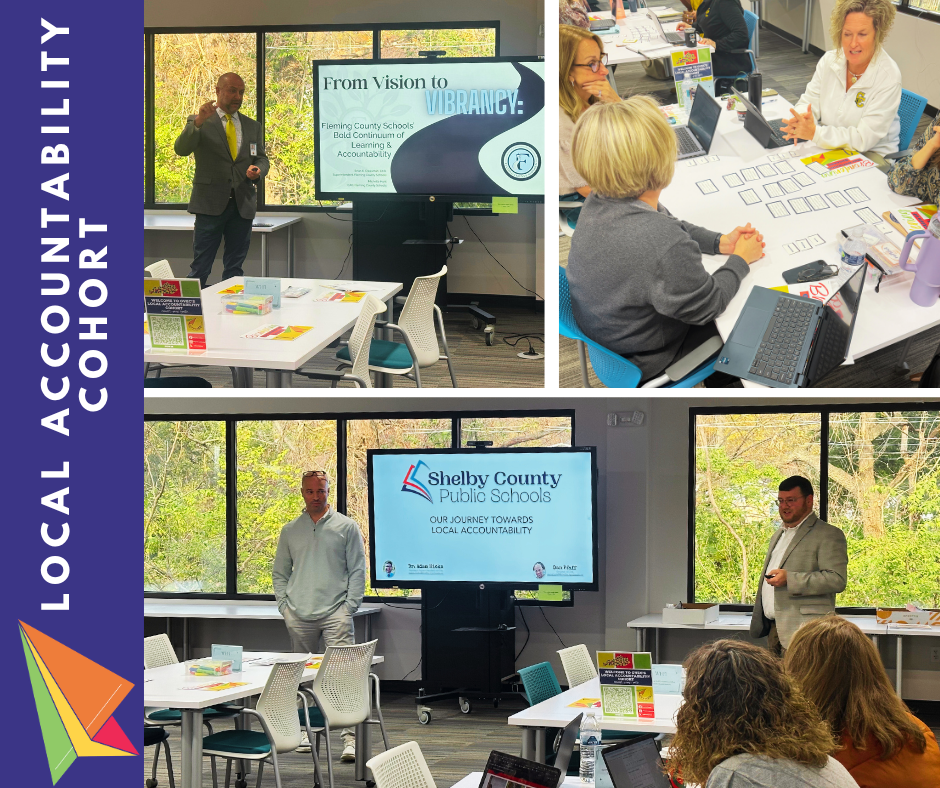
This interactive session co-hosted by the KDE Division of Innovation and UK Next Gen, features the new KDE Local Accountability Design Guide & Toolkit.

🔗 sign up here.             

🔗 Flyer


✈️ December 9 – Designing Defenses of Learning (9am–3pm)


COACHES + BUILDING & DISTRICT LEADERS: 


Whether you’re launching defenses for the first time or ready to reimagine the ones you have, this session is your design lab. We’ll spend the day exploring:

  • What makes a defense truly learner-centered
  • How to design prompts, artifacts, and reflection arcs that spotlight growth
  • Ways to bring students, staff, and the community into the experience

You’ll leave with a defense model that’s bold, doable, and ready to showcase the strengths and journeys of your learners.

🔗 sign up here


By Lacey Eckels December 2, 2025
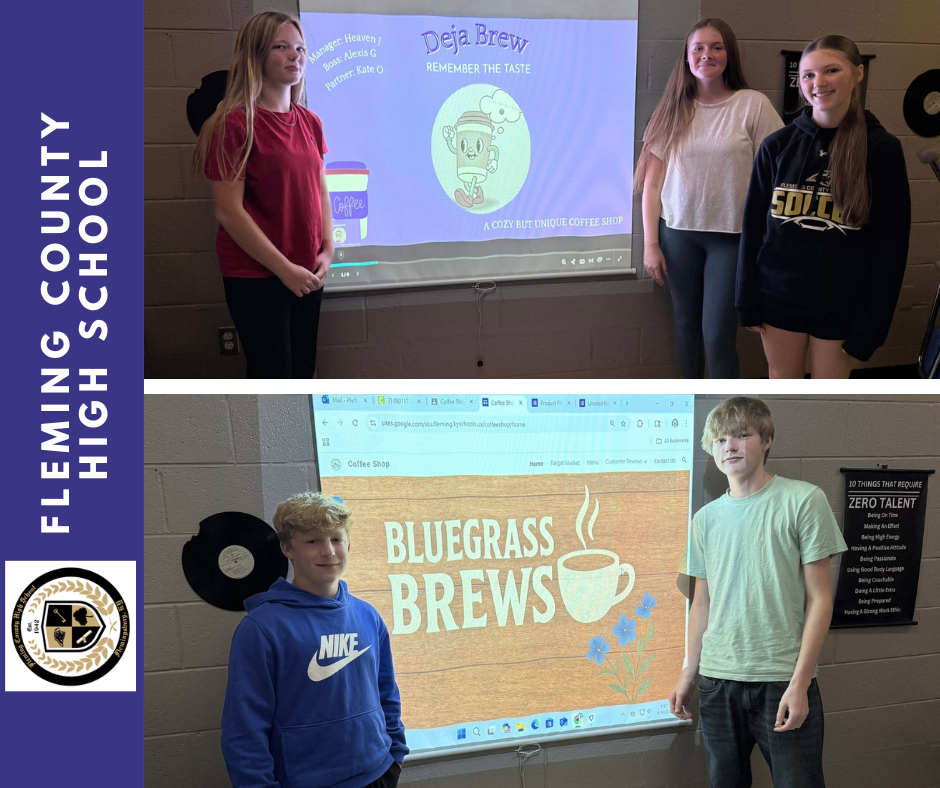
The Prichard Committee's newest work on the Meaningful Diploma lifts up a challenge many districts feel: seniors often spend their final year in courses that feel disconnected from the futures they're stepping into. Fleming County High School saw that firsthand. Many seniors—especially those heading straight into work or technical programs—were sitting in traditional English classes that didn't match their goals, while their CTE pathways were buzzing with real-world learning, certifications, and purpose. That tension sparked a simple but powerful question: What if senior English lived where students already felt meaning? Fleming County's answer: allow seniors to earn their English credit inside their CTE pathway, where reading, writing, and communication flow from the authentic work they're already doing. The results are alive in classrooms. Instead of Beowulf, welding students analyze OSHA manuals tied directly to the safety skills they're building in the shop. Early childhood students write narratives grounded in their fieldwork with local preschoolers. Ag seniors craft informational pieces connected to the certifications they're earning. Family & Consumer Sciences students develop business concepts from the ground up: researching requirements, outlining processes, and writing the accompanying plans. It's still English—every priority standard intact—but suddenly relevant, embodied, and connected to a future students can see. CTE teachers teach English 12 themselves, using Schools PLP as the spine and collaborating with ELA colleagues to ensure rigor stays high—an approach that shows how staffing, standards, and pathways can work together instead of competing for time. The benefits are already visible: stronger writing across the building, clearer purpose for seniors, and a staff that sees itself less as “departments” and more as a unified team designing for student futures. Fleming County is illustrating how aligned, purposeful design of the student experience can strengthen both engagement and the quality of student work.
By Lacey Eckels November 18, 2025
Discover how Kentucky districts are leading the charge in local accountability — real stories from Fleming and Shelby Counties, a practical Alumni + Employer Roundtable tool, and your Fall Learning Flight Plan to design learner-centered Defenses of Learning.
By Lacey Eckels November 10, 2025
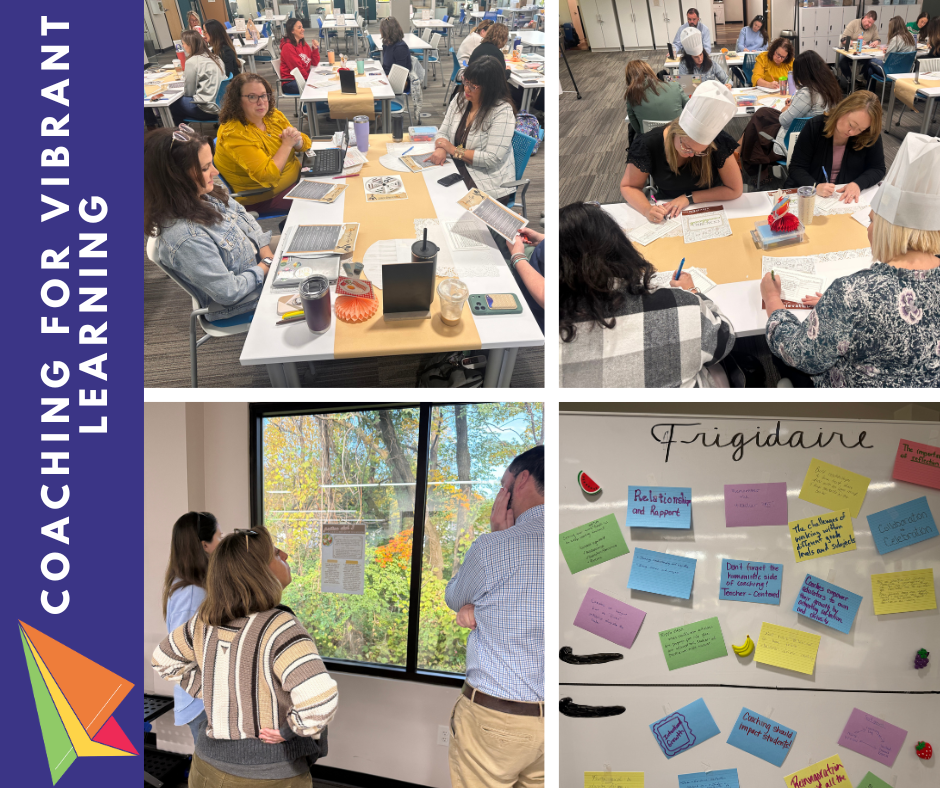
Discover how vibrant coaching fuels vibrant learning—explore the five-shift Coaching Transformations framework, access a free sample Coaching Cards deck, and join upcoming interactive sessions to design human-centered educator experiences.
Show More
By Lacey Eckels December 2, 2025
The Prichard Committee's newest work on the Meaningful Diploma lifts up a challenge many districts feel: seniors often spend their final year in courses that feel disconnected from the futures they're stepping into. Fleming County High School saw that firsthand. Many seniors—especially those heading straight into work or technical programs—were sitting in traditional English classes that didn't match their goals, while their CTE pathways were buzzing with real-world learning, certifications, and purpose. That tension sparked a simple but powerful question: What if senior English lived where students already felt meaning? Fleming County's answer: allow seniors to earn their English credit inside their CTE pathway, where reading, writing, and communication flow from the authentic work they're already doing. The results are alive in classrooms. Instead of Beowulf, welding students analyze OSHA manuals tied directly to the safety skills they're building in the shop. Early childhood students write narratives grounded in their fieldwork with local preschoolers. Ag seniors craft informational pieces connected to the certifications they're earning. Family & Consumer Sciences students develop business concepts from the ground up: researching requirements, outlining processes, and writing the accompanying plans. It's still English—every priority standard intact—but suddenly relevant, embodied, and connected to a future students can see. CTE teachers teach English 12 themselves, using Schools PLP as the spine and collaborating with ELA colleagues to ensure rigor stays high—an approach that shows how staffing, standards, and pathways can work together instead of competing for time. The benefits are already visible: stronger writing across the building, clearer purpose for seniors, and a staff that sees itself less as “departments” and more as a unified team designing for student futures. Fleming County is illustrating how aligned, purposeful design of the student experience can strengthen both engagement and the quality of student work.
By Lacey Eckels November 18, 2025
Discover how Kentucky districts are leading the charge in local accountability — real stories from Fleming and Shelby Counties, a practical Alumni + Employer Roundtable tool, and your Fall Learning Flight Plan to design learner-centered Defenses of Learning.
By Lacey Eckels November 10, 2025
Discover how vibrant coaching fuels vibrant learning—explore the five-shift Coaching Transformations framework, access a free sample Coaching Cards deck, and join upcoming interactive sessions to design human-centered educator experiences.
Show More


Share this article