

November 4, 2025

FullScale Symposium: Pushing the Edges of Competency-Based Learning

FullScale Symposium: Pushing the Edges of Competency-Based Learning

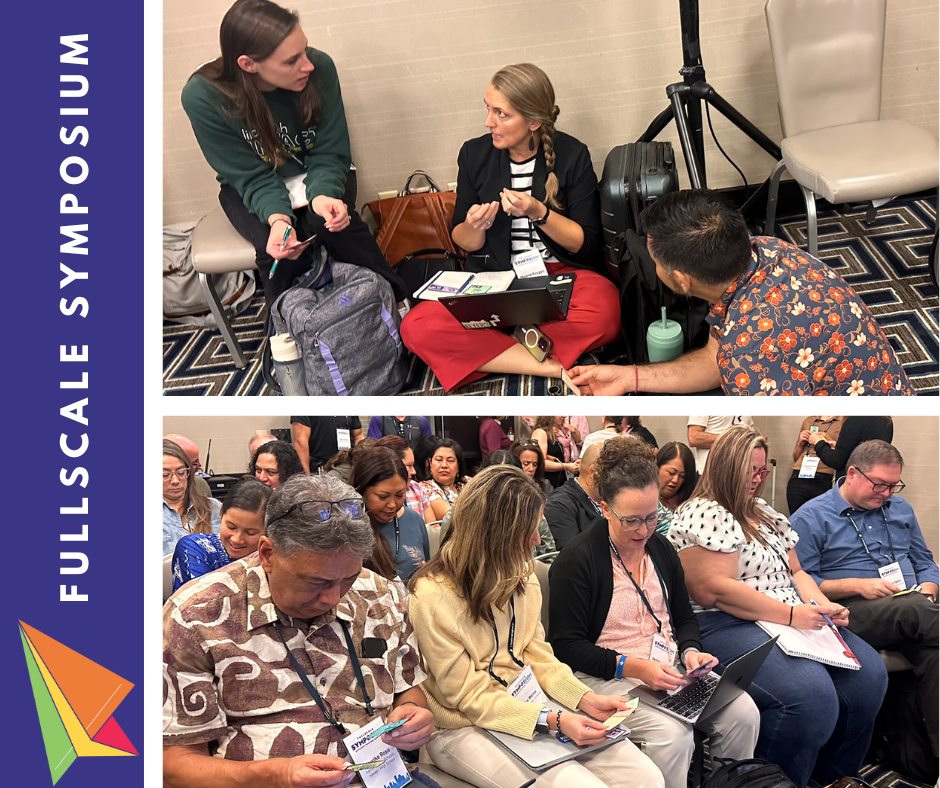
Last week, educators from across the country gathered for the FullScale Symposium, a national convening on the future of competency-based learning. Our team joined forces with leaders from Mesa Public Schools to explore one of the most practical, and often underestimated, levers for change: the master schedule.


In our session, we framed the schedule as the proverbial fence between traditional and competency-based models. Knocking the fence down entirely, redesigning the whole schedule from scratch, sounds bold, but it’s also incredibly hard. The structure of school is stubborn; bell schedules, credits, and class periods pull us back toward what we’ve always done. Too often, we end up painting the same six-period fence a different color instead of changing what it’s made of.


We offered another path: find the edges—the places where the fence is already cracked or has a few holes in it. This means finding places that are low-risk, potentially high reward: for example, reimagining an underutilized homeroom period to be a launching pad for passion projects or piloting an interdisciplinary model with a math and science teacher excited about the idea. These are the entry points for small, research-and-design shifts you can try right away with a team of teachers and learners.


Participants explored a protocol called “Pushing the Edges” to map their own schedules, spotting moments where rethinking how we allocate time, people, courses & credit, and technology could be powerful entry points for a better learner experience. Big change, especially sustainable change, doesn’t have to begin with bulldozers; it begins at the edges, where bold ideas and willing teams start carving new paths through the fence.


Tool for Reimagining Master Schedules: Pushing the Edges Protocol

Is your team looking to reimagine time, but not sure where to start? The Pushing the Edges protocol helps schools move from big aspirations to actionable ideas by uncovering what’s already possible within the schedule you have.


Instead of prescribing a model or template, this tool turns the conversation itself into the design space. Through a series of structured rounds, teams surface small but meaningful opportunities—the edges—where new ways of using time, people, courses & credit, and technology could take root.


Each round moves the group from individual sparks to shared insights to collective next steps, often ending with a why statement that captures what they want their schedule to make possible for learners. It’s a simple but powerful way to build momentum: to notice the cracks in the fence, and decide, together, how to widen them to create a more meaningful learner experience.


📎 Download the Pushing the Edges protocol to try with your own team.


We partner with schools and districts to begin pushing on the edges. If you’re ready to find places to push that are low-risk high reward we are here to help! 


Your Fall Learning Flight Plan

🚨LAST CALL! 🚨


✈️ November 5 – COACHING FOR VIBRANT LEARNING (9am–3pm)


COACHES + BUILDING & DISTRICT LEADERS: 


You spend your days feeding others…but who’s feeding you? This session is your refill. We will spend the day exploring: 

  • What’s fueling, and draining, your current coaching cycles
  • What kind of nourishment those you serve might need
  • How to create low-lift, high-impact moves that energize both you and your team

🔗 sign up here


 ✈️ November 12 – KDE: Designing Local Accountability Systems (9am–12pm)


DISTRICT + SCHOOL LEADERS, TEACHERS, AND COACHES:


Ready to reimagine what accountability can look like when it’s locally designed and learning-centered? Join us to explore:

  • What “success” truly means for your students, schools, and district
  • How to design vibrant learning experiences that demonstrate growth
  • Ways to build a community-owned system that reflects your local story

This interactive session co-hosted by the KDE Division of Innovation and UK Next Gen, features the new KDE Local Accountability Design Guide & Toolkit.

🔗 sign up here.             

🔗 Flyer


✈️ December 9 – Designing Defenses of Learning (9am–3pm)


COACHES + BUILDING & DISTRICT LEADERS: 


Whether you’re launching defenses for the first time or ready to reimagine the ones you have, this session is your design lab. We’ll spend the day exploring:

  • What makes a defense truly learner-centered
  • How to design prompts, artifacts, and reflection arcs that spotlight growth
  • Ways to bring students, staff, and the community into the experience

You’ll leave with a defense model that’s bold, doable, and ready to showcase the strengths and journeys of your learners.

🔗 sign up here


By Lacey Eckels April 2, 2026
Schools have named durable skills like communication and collaboration, but struggle to teach them intentionally. Schools that succeed make skills visible, embed them into daily learning, and apply them in real-world contexts. The core message is clear: durable skills are built through intentional, everyday design.
By Lacey Eckels March 17, 2026
What does it look like when a student’s Defense of Learning truly embodies a district’s Profile of a Learner? This 11-year-old’s compelling TED-style talk offers a powerful example. The format might not be what many of us expect in a traditional defense, yet the Portrait competencies are unmistakably present. Communication is evident in his pacing, tone, eye contact, and ability to connect with the audience. Collaboration surfaces as he references mentors and teammates who shaped his journey. Critical thinking appears in the way he interprets experiences and draws lessons from them. Problem-solving emerges through stories of obstacles, setbacks, and growth. The competencies aren’t listed on a slide. They are visible in the delivery. From Sorting Evidence to Synthesizing Growth Many student defenses are structured competency by competency: “Here is my artifact. Here is how it shows I am an effective communicator.” This approach provides clarity and helpful scaffolding, especially as districts begin Portrait work. Over time, however, the structure can unintentionally shift the focus from growth to compliance. The TED-style defense offers a different approach. Instead of sorting artifacts into categories, the student synthesized experiences into a cohesive narrative. He reflected on meaningful moments, described growth over time, connected experiences to identity, and communicated his story clearly to an authentic audience. Rather than organizing artifacts, he was articulating who he is becoming. A Design Question for Leaders What if the defense itself became the demonstration of Profile competencies?  In other words, what if the most powerful defenses were those in which students embody communication, critical thinking, collaboration, and problem-solving through the way they share their learning—making the competencies visible in action, not just in explanation?
By Lacey Eckels March 3, 2026
Start with purpose when designing Defenses of Learning. Discover how clarity transforms these experiences from compliance-driven tasks into meaningful opportunities for student reflection, growth, and authentic demonstration of learning.
Show More
By Lacey Eckels April 2, 2026
Schools have named durable skills like communication and collaboration, but struggle to teach them intentionally. Schools that succeed make skills visible, embed them into daily learning, and apply them in real-world contexts. The core message is clear: durable skills are built through intentional, everyday design.
By Lacey Eckels March 17, 2026
What does it look like when a student’s Defense of Learning truly embodies a district’s Profile of a Learner? This 11-year-old’s compelling TED-style talk offers a powerful example. The format might not be what many of us expect in a traditional defense, yet the Portrait competencies are unmistakably present. Communication is evident in his pacing, tone, eye contact, and ability to connect with the audience. Collaboration surfaces as he references mentors and teammates who shaped his journey. Critical thinking appears in the way he interprets experiences and draws lessons from them. Problem-solving emerges through stories of obstacles, setbacks, and growth. The competencies aren’t listed on a slide. They are visible in the delivery. From Sorting Evidence to Synthesizing Growth Many student defenses are structured competency by competency: “Here is my artifact. Here is how it shows I am an effective communicator.” This approach provides clarity and helpful scaffolding, especially as districts begin Portrait work. Over time, however, the structure can unintentionally shift the focus from growth to compliance. The TED-style defense offers a different approach. Instead of sorting artifacts into categories, the student synthesized experiences into a cohesive narrative. He reflected on meaningful moments, described growth over time, connected experiences to identity, and communicated his story clearly to an authentic audience. Rather than organizing artifacts, he was articulating who he is becoming. A Design Question for Leaders What if the defense itself became the demonstration of Profile competencies?  In other words, what if the most powerful defenses were those in which students embody communication, critical thinking, collaboration, and problem-solving through the way they share their learning—making the competencies visible in action, not just in explanation?
By Lacey Eckels March 3, 2026
Start with purpose when designing Defenses of Learning. Discover how clarity transforms these experiences from compliance-driven tasks into meaningful opportunities for student reflection, growth, and authentic demonstration of learning.
Show More


Share this article