
October 6, 2025

Vote. Learn. Lead.

Vote. Learn. Lead.

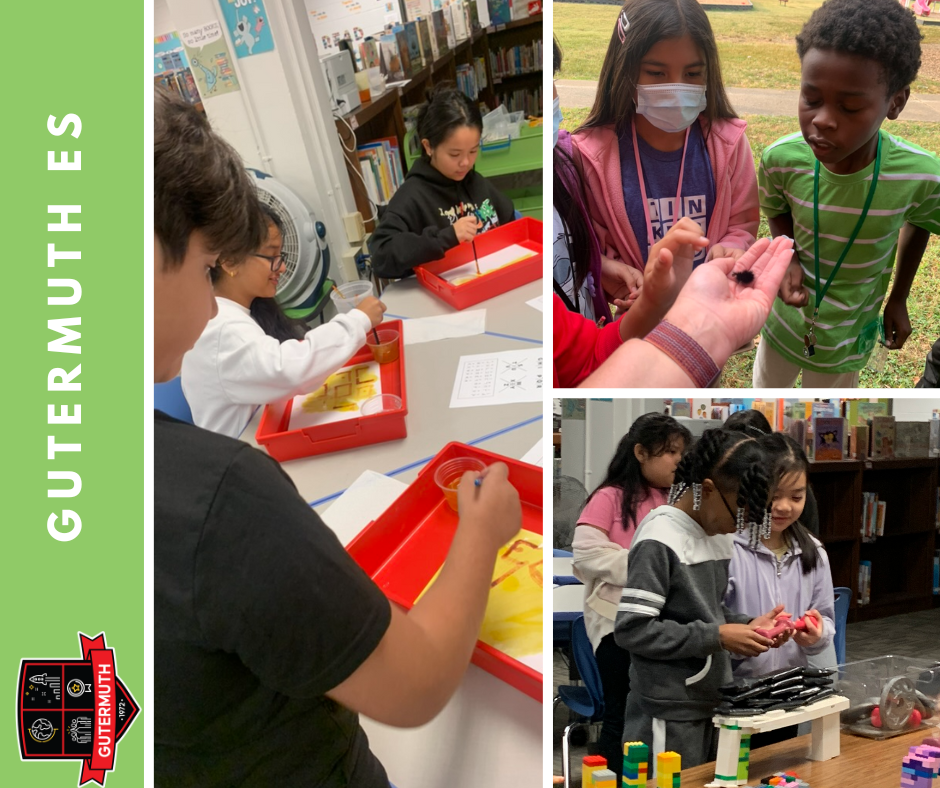
What happens when you give kids the power to choose their own learning path?At Gutermuth Elementary School, Special Area has become the answer. Instead of being told where to go, 4th and 5th graders pull out their devices every three weeks to vote on their next unit, casting ranked choices after watching short teacher-made “promo videos.” The result: buzzing excitement before units even begin.


The system behind it is both structured and flexible. Each teacher designs a three-week unit; from podcasting to LEGO engineering to photography. Student votes are gathered through Google Forms, and the teacher team works to give everyone a first or second choice. When a unit overfills, they spin the Wheel of Names to keep things fair. 


The learning itself is hands-on and capped with authentic exhibitions. In the one of the first units Picture Perfect , students explored techniques like rule of thirds, light filters, and symmetry before creating photography portfolios, six-word stories, and a gallery exhibition where they shared their best work with peers and staff . Each unit also includes a “Profile of a Learner” artifact, so by year’s end, every learner has a collection of 12 authentic demonstrations of growth.


And the impact? Engagement is high, behavior issues are rare, and teachers are energized. As the teacher leading the charge Cindy Hundley shared: “The kids are so well-behaved because they are doing what they are interested in. If you don’t like coding, don’t pick coding.” What started as a bold idea is now a learner-led system that proves choice isn’t just a perk, it’s a powerful pathway to ownership.


✈️ For more information check out Cindy Hundley's presentation HERE


Playing with Time

Gutermuth's Special Area redesign is a powerful example of the Learner-Led Transformation in action. By giving students real choice in their units, they created a structure where ownership, motivation, and engagement all rose naturally. It’s a reminder that when learners help decide the “what” and “how,” the energy in the room shifts.


But you don’t need to rework an entire block to bring that same spirit into your classroom or school. Sometimes, the key lever is time. How we organize minutes, hours, or weeks can either limit choice or unlock it.


That’s why we created the Learner-Led Menu: Playing with Time. It highlights six practical ways teachers and leaders can carve out space for student choice, from one-day immersions to weekly blocks to passion project cycles. Think of it as a menu of entry points: small shifts you can try right away, or bigger experiments you might pilot with a team. Each option is a way to make the Learner-Led Transformation visible and doable in your own context.


✈️ Explore the full Learner-Led Menu: Playing with Time here.


Your Fall Learning Flight Plan

COACHES + INSTRUCTIONAL LEADERS: 


✈️ November 5 – Coaching for Vibrant Learning (9am–3pm)


Why settle for coaching that feels like compliance? This day is built for instructional coaches, team leads, and anyone who supports teachers—giving you the tools and energy to make coaching joyful, impactful, and impossible to ignore.

🔗 sign up here


COACHES + BUILDING & DISTRICT LEADERS: 


✈️ December 9 – Designing Defenses of Learning (9am–3pm)


Whether your school is launching defenses for the first time or ready to reimagine the ones you have, this day is for you. Together we’ll design (or redesign) defenses of learning that center growth, reflection, and student voice. Through inspiring examples and a collaborative design sprint, you’ll leave with a model ready to showcase the strengths and journeys of your learners.

🔗 sign up here


By Lacey Eckels April 2, 2026
Schools have named durable skills like communication and collaboration, but struggle to teach them intentionally. Schools that succeed make skills visible, embed them into daily learning, and apply them in real-world contexts. The core message is clear: durable skills are built through intentional, everyday design.
By Lacey Eckels March 17, 2026
What does it look like when a student’s Defense of Learning truly embodies a district’s Profile of a Learner? This 11-year-old’s compelling TED-style talk offers a powerful example. The format might not be what many of us expect in a traditional defense, yet the Portrait competencies are unmistakably present. Communication is evident in his pacing, tone, eye contact, and ability to connect with the audience. Collaboration surfaces as he references mentors and teammates who shaped his journey. Critical thinking appears in the way he interprets experiences and draws lessons from them. Problem-solving emerges through stories of obstacles, setbacks, and growth. The competencies aren’t listed on a slide. They are visible in the delivery. From Sorting Evidence to Synthesizing Growth Many student defenses are structured competency by competency: “Here is my artifact. Here is how it shows I am an effective communicator.” This approach provides clarity and helpful scaffolding, especially as districts begin Portrait work. Over time, however, the structure can unintentionally shift the focus from growth to compliance. The TED-style defense offers a different approach. Instead of sorting artifacts into categories, the student synthesized experiences into a cohesive narrative. He reflected on meaningful moments, described growth over time, connected experiences to identity, and communicated his story clearly to an authentic audience. Rather than organizing artifacts, he was articulating who he is becoming. A Design Question for Leaders What if the defense itself became the demonstration of Profile competencies?  In other words, what if the most powerful defenses were those in which students embody communication, critical thinking, collaboration, and problem-solving through the way they share their learning—making the competencies visible in action, not just in explanation?
By Lacey Eckels March 3, 2026
Start with purpose when designing Defenses of Learning. Discover how clarity transforms these experiences from compliance-driven tasks into meaningful opportunities for student reflection, growth, and authentic demonstration of learning.
Show More
By Lacey Eckels April 2, 2026
Schools have named durable skills like communication and collaboration, but struggle to teach them intentionally. Schools that succeed make skills visible, embed them into daily learning, and apply them in real-world contexts. The core message is clear: durable skills are built through intentional, everyday design.
By Lacey Eckels March 17, 2026
What does it look like when a student’s Defense of Learning truly embodies a district’s Profile of a Learner? This 11-year-old’s compelling TED-style talk offers a powerful example. The format might not be what many of us expect in a traditional defense, yet the Portrait competencies are unmistakably present. Communication is evident in his pacing, tone, eye contact, and ability to connect with the audience. Collaboration surfaces as he references mentors and teammates who shaped his journey. Critical thinking appears in the way he interprets experiences and draws lessons from them. Problem-solving emerges through stories of obstacles, setbacks, and growth. The competencies aren’t listed on a slide. They are visible in the delivery. From Sorting Evidence to Synthesizing Growth Many student defenses are structured competency by competency: “Here is my artifact. Here is how it shows I am an effective communicator.” This approach provides clarity and helpful scaffolding, especially as districts begin Portrait work. Over time, however, the structure can unintentionally shift the focus from growth to compliance. The TED-style defense offers a different approach. Instead of sorting artifacts into categories, the student synthesized experiences into a cohesive narrative. He reflected on meaningful moments, described growth over time, connected experiences to identity, and communicated his story clearly to an authentic audience. Rather than organizing artifacts, he was articulating who he is becoming. A Design Question for Leaders What if the defense itself became the demonstration of Profile competencies?  In other words, what if the most powerful defenses were those in which students embody communication, critical thinking, collaboration, and problem-solving through the way they share their learning—making the competencies visible in action, not just in explanation?
By Lacey Eckels March 3, 2026
Start with purpose when designing Defenses of Learning. Discover how clarity transforms these experiences from compliance-driven tasks into meaningful opportunities for student reflection, growth, and authentic demonstration of learning.
Show More


Share this article