
September 22, 2025

After the Tassle

Ready for the Real-World

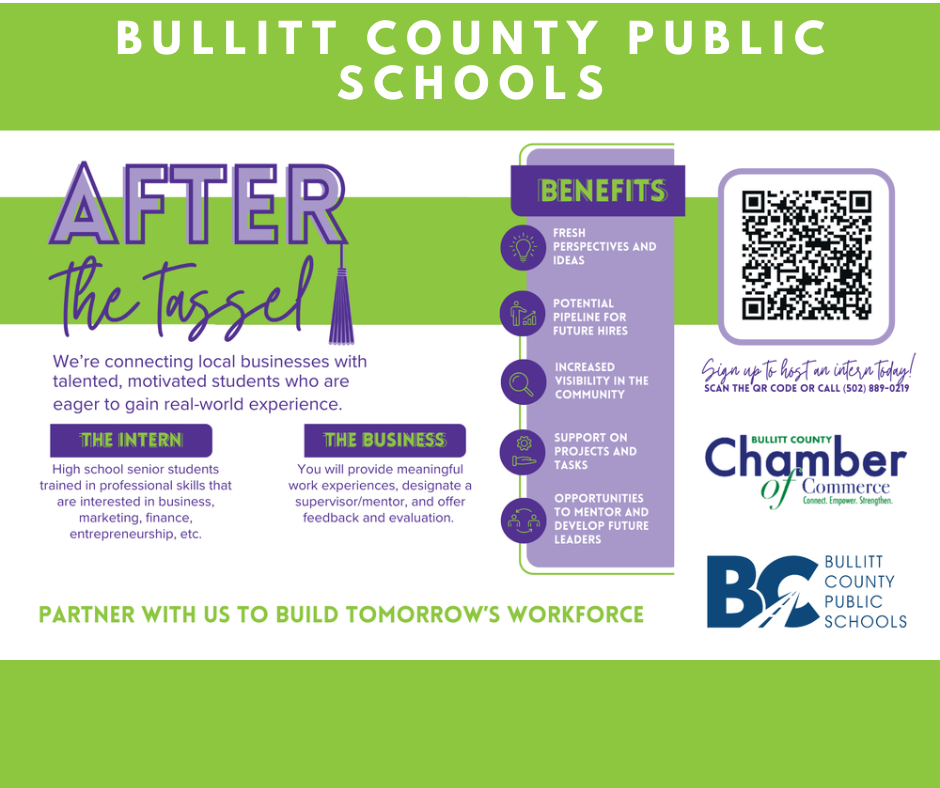
Bullitt County is charting a bold course toward transformational learning. As part of their journey to build a Community-Based Accountability Model, one message from families and community members has been clear: graduates must be ready for the real world.


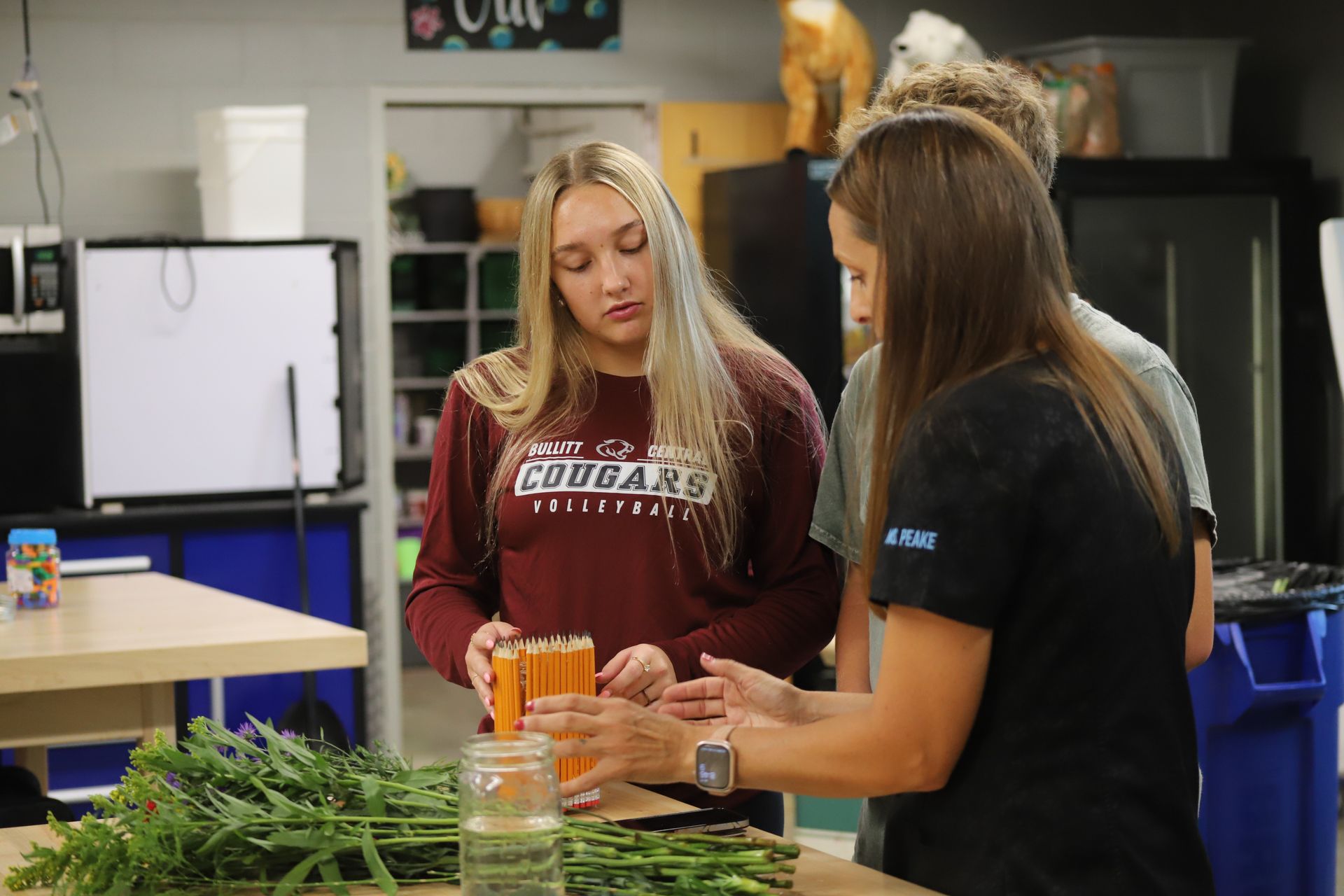
Enter After the Tassel. This program connects seniors with meaningful work experiences, linking local businesses hungry for fresh ideas with students eager to gain skills and purpose. Internships, mentoring, and real-world projects give learners a launchpad while strengthening community connections.


It’s more than career prep. It’s a system-wide commitment to Personal and Real-World Transformations, where every student can graduate with confidence, opportunity, and a pathway forward.


Together with business partners, families, and educators, Bullitt County is proving that when schools and communities align, both the future workforce the future of learning get stronger.


Connecting Learners to Mentors

Bullitt County’s After the Tassel program is a bold vision for connecting students with paid internships and real-world learning before graduation. Is your district interested in giving learners more real-world, work-based experiences but not sure where or how to start?


That’s where this resource from Learner-Centered Collaborative comes in: Connect Learners to Mentors. It offers practical, scalable ways to deepen professional-mentor connections, whether through community partnerships, professional mentors, or even virtual networks that extend beyond your town’s borders.


Think of it as a toolkit for building the bridge between classrooms and careers. Whether you’re just beginning or ready to expand, these strategies can help you design experiences that spark confidence, purpose, and real-world readiness. And, as always, we’re happy to be your thought partners on the journey. 


Your Fall Learning Flight Plan

👀 WE HOPE TO SEE YOU AT THE CONTINUOUS IMPROVEMENT SUMMIT! 


We’re teaming up with the Kentucky Department of Education and UK Next Generation Leadership to introduce the new Local Accountability Design Guide—a resource with tools, strategies, and ideas to support your district’s journey toward local accountability.


📅 September 22 | 1:15–2:15 PM

📅 September 23 | 1:45–2:45 PM
 

DISTRICT LEADERS: READY TO REWRITE YOUR STORY OF SUCCESS?


✈️ September 29 – Local Accountability Cohort Kickoff (9am–12pm)

Current systems only tell part of the picture, and it’s time for more. This cohort is designed for superintendents, district teams, and leaders who are ready to move beyond compliance and shape a richer narrative of learning

🔗 sign up here


COACHES + INSTRUCTIONAL LEADERS: THIS ONE’S FOR YOU.


✈️ November 5 – Coaching for Vibrant Learning (9am–3pm)

Why settle for coaching that feels like compliance? This day is built for instructional coaches, team leads, and anyone who supports teachers—giving you the tools and energy to make coaching joyful, impactful, and impossible to ignore.

🔗 sign up here


By Lacey Eckels April 2, 2026
Schools have named durable skills like communication and collaboration, but struggle to teach them intentionally. Schools that succeed make skills visible, embed them into daily learning, and apply them in real-world contexts. The core message is clear: durable skills are built through intentional, everyday design.
By Lacey Eckels March 17, 2026
What does it look like when a student’s Defense of Learning truly embodies a district’s Profile of a Learner? This 11-year-old’s compelling TED-style talk offers a powerful example. The format might not be what many of us expect in a traditional defense, yet the Portrait competencies are unmistakably present. Communication is evident in his pacing, tone, eye contact, and ability to connect with the audience. Collaboration surfaces as he references mentors and teammates who shaped his journey. Critical thinking appears in the way he interprets experiences and draws lessons from them. Problem-solving emerges through stories of obstacles, setbacks, and growth. The competencies aren’t listed on a slide. They are visible in the delivery. From Sorting Evidence to Synthesizing Growth Many student defenses are structured competency by competency: “Here is my artifact. Here is how it shows I am an effective communicator.” This approach provides clarity and helpful scaffolding, especially as districts begin Portrait work. Over time, however, the structure can unintentionally shift the focus from growth to compliance. The TED-style defense offers a different approach. Instead of sorting artifacts into categories, the student synthesized experiences into a cohesive narrative. He reflected on meaningful moments, described growth over time, connected experiences to identity, and communicated his story clearly to an authentic audience. Rather than organizing artifacts, he was articulating who he is becoming. A Design Question for Leaders What if the defense itself became the demonstration of Profile competencies?  In other words, what if the most powerful defenses were those in which students embody communication, critical thinking, collaboration, and problem-solving through the way they share their learning—making the competencies visible in action, not just in explanation?
By Lacey Eckels March 3, 2026
Start with purpose when designing Defenses of Learning. Discover how clarity transforms these experiences from compliance-driven tasks into meaningful opportunities for student reflection, growth, and authentic demonstration of learning.
Show More
By Lacey Eckels April 2, 2026
Schools have named durable skills like communication and collaboration, but struggle to teach them intentionally. Schools that succeed make skills visible, embed them into daily learning, and apply them in real-world contexts. The core message is clear: durable skills are built through intentional, everyday design.
By Lacey Eckels March 17, 2026
What does it look like when a student’s Defense of Learning truly embodies a district’s Profile of a Learner? This 11-year-old’s compelling TED-style talk offers a powerful example. The format might not be what many of us expect in a traditional defense, yet the Portrait competencies are unmistakably present. Communication is evident in his pacing, tone, eye contact, and ability to connect with the audience. Collaboration surfaces as he references mentors and teammates who shaped his journey. Critical thinking appears in the way he interprets experiences and draws lessons from them. Problem-solving emerges through stories of obstacles, setbacks, and growth. The competencies aren’t listed on a slide. They are visible in the delivery. From Sorting Evidence to Synthesizing Growth Many student defenses are structured competency by competency: “Here is my artifact. Here is how it shows I am an effective communicator.” This approach provides clarity and helpful scaffolding, especially as districts begin Portrait work. Over time, however, the structure can unintentionally shift the focus from growth to compliance. The TED-style defense offers a different approach. Instead of sorting artifacts into categories, the student synthesized experiences into a cohesive narrative. He reflected on meaningful moments, described growth over time, connected experiences to identity, and communicated his story clearly to an authentic audience. Rather than organizing artifacts, he was articulating who he is becoming. A Design Question for Leaders What if the defense itself became the demonstration of Profile competencies?  In other words, what if the most powerful defenses were those in which students embody communication, critical thinking, collaboration, and problem-solving through the way they share their learning—making the competencies visible in action, not just in explanation?
By Lacey Eckels March 3, 2026
Start with purpose when designing Defenses of Learning. Discover how clarity transforms these experiences from compliance-driven tasks into meaningful opportunities for student reflection, growth, and authentic demonstration of learning.
Show More


Share this article